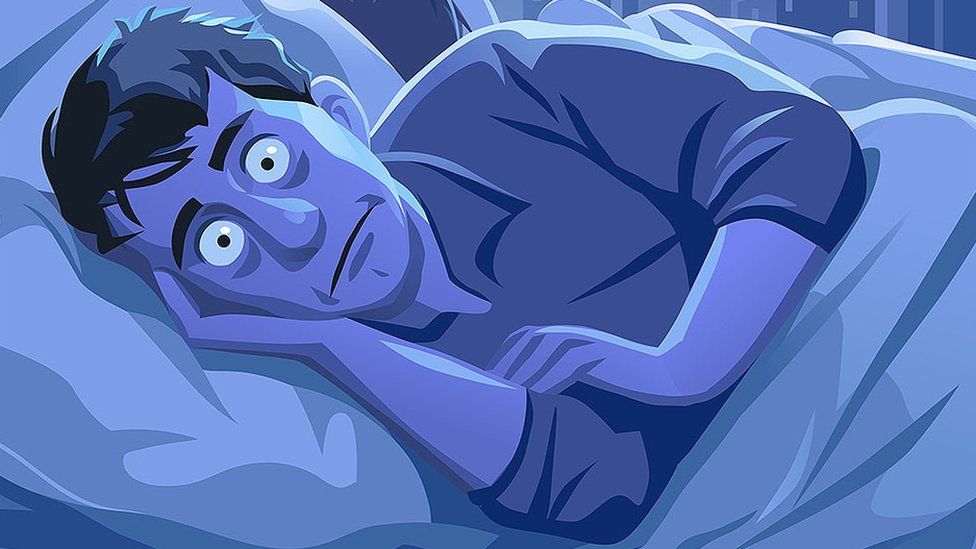
Irregular sleep habits may increase atherosclerosis risk.
According to new research published today in the Journal of the American Heart Association, an open access, peer-reviewed journal of the American Heart Association, irregular sleep patterns, such as sleeping fewer or more hours each night and going to bed at various times, may put adults over 45 at an increased risk of developing atherosclerosis.

A recent study investigates the relationship between irregular sleeping patterns, atherosclerosis, and not keeping a regular bedtime.
The study discovered that older persons were much more likely to experience subclinical symptoms of atherosclerosis. Only if their sleep patterns altered by an average of two hours over the course of a single week and by an hour and a half.
What is Atherosclerosis?
When you have atherosclerosis, the interior of your arteries develop sticky plaques made of cholesterol, fatty deposits, and cell waste products from your blood. As a result, the plaques thicken and sometimes even harden the arterial walls. The illness restricts blood flow, making it difficult for your organs to receive enough oxygen.
According to the National Institutes of Health (NIH) of the United States, the disease associated with atherosclerosis is the country’s top cause of mortality. Also, it affects 50% of Americans between the ages of 45 and 84.
Study on sleep and disease risks
MESA (Multi-Ethnic Study of Atherosclerosis), a different community-based study, involved 2032 participants in the study. The goal of MESA was to examine the features and risk factors of subclinical atherosclerosis symptoms in a variety of senior citizens.
In light of this, slightly more than half of MESA participants were female. Participants self-identified as White in 38% of cases, Black or African American in 28%, Hispanic in 23%, and Chinese in 11% of cases. They came from a variety of geographical locations, including St. Paul, Minnesota; Baltimore City and Baltimore County. Also, Maryland; Chicago, Illinois; Forsyth County, North Carolina; Los Angeles County, California; Northern Manhattan; and the Bronx, New York.
The participants’ ages, which ranged from 45 to 84 with an average of 69, were all within the normal range for cardiovascular disease. During seven days, each participant wore a wristwatch that recorded when they were awake or slept. They also finished keeping sleep logs.
Last but not least, each person took part in a single night of in-home sleep monitoring that recorded their breathing, heart rate, sleep phases, and length.
In the current study, person with irregular sleep patterns were 1.33 times more likely to have high coronary artery calcium. This is compared to those with more regular sleep duration variations, which varied by an average of two hours per week. Moreover, they had a 1.75 times higher likelihood of having abnormal ankle brachial indices.
Researchers discovered a 1.39 times greater chance of calcified arterial plaques in patients whose bedtimes changed by an average of 90 minutes over the course of a week.
The connection between sleep and atherosclerosis
The circadian rhythm, a 24-hour internal clock in our bodies, controls a variety of physiological activities. This includes sleep-wake cycles. We can experience what is known as “social jet lag” when we frequently go to bed and wake up at different times. According to Dr. José M. Ordovás of Tufts University, who was not involved in the study. This can disturb our circadian rhythm.
Dr. Hoang Nguyen is an interventional cardiologist who was not engaged in the study. He told Medical News Today:
The scientists hypothesised that irregular sleep patterns encourage cardiovascular disease by interfering with the body’s normal circadian cycle. This in turn affects inflammation, glucose metabolism, and sympathetic neurohorma. Cardiovascular disease is known to be brought on by each of these variables.
According to Dr. Ordovás, “the sympathetic nervous system (SNS) activity is normally lowered during sleep. This allows the body to relax and recuperate.” On the other hand, he continued, “Sleep problems, such as sleep apnea, can result in increased SNS activity, which can produce hypertension and other CVD risk factors.
According to the press release, the researchers were unable to determine “whether increased sleep irregularity increases the development of atherosclerosis” . However, sleep and atherosclerosis could not be evaluated concurrently.
Too little sleep, too much, and just right
Dr. Full added that no differences were found in the atherosclerosis indicators of the participants in their study, which followed individuals who frequently slept more or less than usual. Like all other people, older individuals should receive between seven and nine hours of sleep per night, according to the NIH.
Some studies have shown that too much sleep might be harmful. Both a short sleep duration of less than 7 hours per night and a lengthy sleep duration of more than 9 hours per night have been linked to an elevated risk of CVD, according to Dr. Ordovás.
The authors of this study “went beyond the quality of sleep, and evaluated the regularity of sleep,” which is interesting, according to Dr. Nguyen.
REFERENCES:
- https://www.medicalnewstoday.com/articles/cardiovascular-health-irregular-sleeping-habits-atherosclerosis-risk
- https://newsroom.heart.org/news/irregular-sleeping-habits-may-increase-risk-of-atherosclerosis-in-older-adults
- https://timesofindia.indiatimes.com/home/science/study-finds-how-irregular-sleeping-habits-increase-risk-of-atherosclerosis-in-older-people/articleshow/98069284.cms
For more details, kindly visit below.