Browsed by
Category: Antibiotics

The Pain Behind the Smile: The Truth About Dental Neglect

The Pain Behind the Smile: The Truth About Dental Neglect

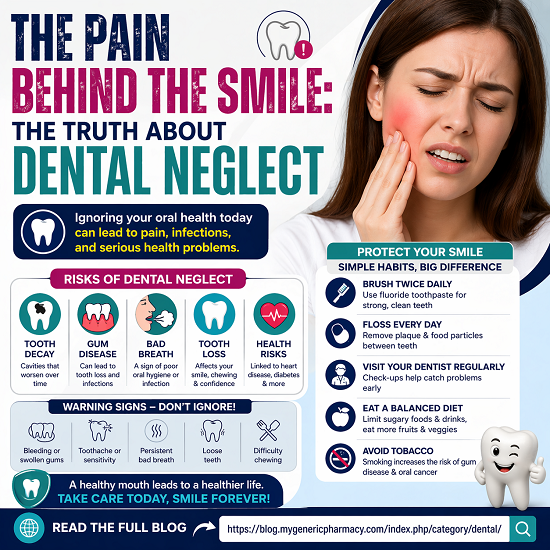
A bright smile often hides more than we realize. In fact, silent dental problems can grow without warning. Over time, these issues can become serious. Dental neglect, ignoring basic oral care, can lead to pain, infections, and even major health problems.

Many people underestimate oral hygiene. However, the truth is simple: your mouth is a gateway to your overall health.


🦷 What Is Dental Neglect?

Dental neglect means not taking proper care of your teeth and gums. In other words, it is the failure to maintain good oral hygiene or seek timely dental care.

Dental Neglect

For example, it includes:

  • Skipping regular brushing and flossing
  • Avoiding dental check-ups
  • Ignoring early signs of oral problems

As a result, these habits can lead to cavities, gum disease, and even tooth loss.


⚠️ Common Problems Caused by Dental Neglect

1. Tooth Decay (Cavities)

First of all, plaque builds up on teeth when they are not cleaned properly. As a result, it produces acids that damage the enamel. This leads to cavities. If left untreated, the problem can worsen and cause infections.

2. Gum Disease

Similarly, gum disease often starts as gingivitis. At this stage, gums become red and swollen. However, if ignored, it can turn into periodontitis. Eventually, this can lead to tooth loss.

3. Bad Breath (Halitosis)

In many cases, bad breath is not just embarrassing—it is a warning sign. Most importantly, it often points to poor oral hygiene or hidden infections.

4. Tooth Loss

Over time, weak teeth and unhealthy gums can result in tooth loss. Consequently, this affects both appearance and the ability to chew properly.


🧠 The Hidden Impact on Overall Health

Importantly, dental neglect does not only affect your mouth. It can also harm your whole body.

For instance, research shows links between oral health and:

  • Heart disease: Bacteria from the gums can enter the bloodstream and affect the heart.
  • Diabetes: Gum disease can make blood sugar harder to control.
  • Respiratory infections: Bacteria can travel to the lungs and cause illness.

Therefore, taking care of your mouth is essential for overall wellness.


🚨 Warning Signs You Should Never Ignore

Early signs are easy to miss. However, ignoring them can lead to serious problems. So, watch out for:

  • Bleeding or swollen gums
  • Tooth pain or sensitivity
  • Persistent bad breath
  • Loose teeth
  • Difficulty chewing

If you notice any of these symptoms, you should see a dentist as soon as possible.


🪥 Simple Steps to Prevent Dental Neglect

Fortunately, prevention is simple and effective. By following a few habits, you can protect your smile.

1. Brush Twice Daily

Always brush your teeth for at least two minutes using fluoride toothpaste.

2. Floss Every Day

In addition, flossing removes plaque from areas your brush cannot reach.

3. Visit Your Dentist Regularly

Most importantly, regular check-ups help catch problems early.

4. Eat a Balanced Diet

Try to limit sugary foods. Instead, choose calcium-rich foods for strong teeth.

5. Avoid Tobacco

Smoking, for example, increases the risk of gum disease and oral cancer.

6. Stay Hydrated:

Drinking water helps clean your mouth and reduce bacteria.


💡 Why People Neglect Dental Care

There are several reasons why people ignore dental care. For instance:

  • Fear of dental treatment
  • High costs
  • Lack of awareness
  • Busy lifestyles

However, delaying care often leads to bigger and more expensive problems later.


✅ The Truth You Shouldn’t Ignore

The biggest misconception is that dental issues are minor or temporary. In reality, neglecting oral health can have long-term consequences that go beyond your smile.

A healthy mouth supports better digestion, clearer speech, and improved confidence. More importantly, it protects your overall health.


🏁 Conclusion

“The pain behind the smile” is real—and preventable. Dental neglect may start silently, but its effects can be serious if ignored. The good news is that simple daily habits and regular dental visits can make a huge difference.

Taking care of your teeth isn’t just about looking good—it’s about living healthier. Start today, because your smile deserves attention and care.


📚 References

  1. World Health Organization (WHO) – Oral Health Fact Sheet
  2. American Dental Association (ADA) – Oral Health Topics
  3. Centers for Disease Control and Prevention (CDC) – Oral Health Conditions
  4. Mayo Clinic – Oral Health: A Window to Your Overall Health

Medications that have been suggested by doctors worldwide are available on the link below
https://mygenericpharmacy.com/category/antibiotics

Bacteria vs You: How to Stay Protected and Recover Faster

Bacteria vs You: How to Stay Protected and Recover Faster

Bacterial infections are among the most common health issues worldwide, ranging from mild conditions like throat infections to serious illnesses such as pneumonia and sepsis. Understanding how these infections spread—and how to prevent and treat them—is essential for protecting your health. In this guide, we’ll break down everything you need to know about bacterial infections, from causes to treatment options.


What Are Bacterial Infections?

Bacterial infections occur when harmful bacteria enter the body, multiply, and cause illness. While many bacteria are harmless or even beneficial, some can lead to infections that require medical attention.

Common types of bacterial infections include:

  • Respiratory infections (e.g., pneumonia)
  • Urinary tract infections (UTIs)
  • Skin infections
  • Gastrointestinal infections

How Do Bacterial Infections Spread?

Bacteria can spread in several ways:

  • Direct contact: Touching an infected person
  • Airborne transmission: Coughing or sneezing
  • Contaminated food or water
  • Poor hygiene practices

Understanding these pathways helps in taking preventive measures.


Common Symptoms to Watch For

Symptoms vary depending on the type of infection, but may include:

If symptoms persist or worsen, medical attention is necessary.


How Are Bacterial Infections Treated?

The primary treatment for bacterial infections is antibiotics, which kill or inhibit bacterial growth.

Commonly used antibiotics include:

These medications are prescribed based on the type and severity of the infection.


The Importance of Proper Antibiotic Use

While antibiotics are highly effective, misuse can lead to Antibiotic resistance—a growing global health concern.

To use antibiotics safely:

  • Always follow your doctor’s prescription
  • Complete the full course
  • Avoid self-medication
  • Do not use antibiotics for viral infections

Responsible use helps preserve the effectiveness of these life-saving drugs.


Prevention: Your First Line of Defense

Preventing bacterial infections is often easier than treating them. Here are key strategies:

1. Maintain Good Hygiene

  • Wash your hands regularly
  • Use sanitizers when needed

2. Safe Food Practices

  • Cook food thoroughly
  • Avoid contaminated water

3. Stay Vaccinated

Vaccines protect against certain bacterial infections like pneumonia and meningitis.

4. Strengthen Your Immune System

  • Eat a balanced diet
  • Exercise regularly
  • Get adequate sleep

When Should You See a Doctor?

Seek medical help if you experience:

  • High or persistent fever
  • Severe pain
  • Difficulty breathing
  • Symptoms that worsen over time

Early diagnosis ensures effective treatment and reduces the risk of complications.


Complications of Untreated Infections

If left untreated, bacterial infections can lead to serious complications, including:

  • Organ damage
  • Blood infections (sepsis)
  • Chronic illness
  • Increased risk of hospitalization

Timely treatment is crucial for preventing these outcomes.


Final Thoughts

Bacterial infections are common but manageable with the right knowledge and care. Antibiotics like Amoxicillin and Azithromycin have revolutionized treatment, saving millions of lives. However, prevention and responsible antibiotic use are equally important. By staying informed, practicing good hygiene, and seeking timely medical care, you can protect yourself and your loved ones from bacterial infections.


References:

  1. World Health Organization – Bacterial infections and antibiotic resistance guidelines
  2. National Institutes of Health – Research on bacterial diseases and antibiotics
  3. Mayo Clinic – Symptoms and treatment of bacterial infections
  4. U.S. Food and Drug Administration – Antibiotic safety and usage

Medications that have been suggested by doctors worldwide are available on the link below
https://mygenericpharmacy.com/category/disease/bacterial-infection

Antibiotics and Infections: What You Need to Know for Safe Treatment

Antibiotics and Infections: What You Need to Know for Safe Treatment

Antibiotics Guide: Uses, Benefits & Safe Treatment

Learn how antibiotics treat bacterial infections, when they are needed, and why responsible use is essential to prevent antibiotic resistance and protect health.

Antibiotics revolutionized medicine in the 20th century, transforming once-deadly infections into treatable conditions. Before antibiotics, a simple scratch could lead to fatal sepsis, and pneumonia was often a death sentence. Today, these miracle drugs save millions of lives annually.

But antibiotics are a finite resource. Their misuse and overuse have accelerated a global crisis: antimicrobial resistance (AMR). Understanding how antibiotics work, when they’re appropriate, and how to use them safely is essential—not just for your health, but for the future of medicine itself.

What Are Antibiotics?

Antibiotics are medications that kill bacteria or stop them from multiplying. They target bacterial structures or functions that human cells don’t have, such as:

  • Cell wall synthesis (penicillins, cephalosporins)
  • Protein production (tetracyclines, macrolides)
  • DNA replication (fluoroquinolones)
  • Folate metabolism (sulfonamides, trimethoprim)

Crucial distinction: Antibiotics work against bacteria, not viruses. They have no effect on:

  • Common colds
  • Flu (influenza)
  • Most sore throats (except strep)
  • Bronchitis (usually viral)
  • Most sinus infections (often viral)
  • COVID-19

When Are Antibiotics Necessary?

Bacterial Infections That Typically Require Antibiotics

  • Strep throat (confirmed by test)
  • Urinary tract infections (UTIs)
  • Bacterial pneumonia
  • Whooping cough
  • Certain skin infections (cellulitis, infected wounds)
  • Sexually transmitted bacterial infections (chlamydia, gonorrhea, syphilis)

Infections That May or May Not Need Antibiotics

  • Ear infections: Some clear without antibiotics, especially in older children
  • Sinus infections: Often viral; bacterial sinusitis may require antibiotics if symptoms persist >10 days
  • Bronchitis: Almost always viral; antibiotics rarely helpful

Your doctor’s decision to prescribe depends on:

  • Infection severity
  • Duration of symptoms
  • Underlying health conditions
  • Risk of complications
  • Test results

The Dangers of Antibiotic Misuse

1. Antibiotic Resistance

When bacteria are exposed to antibiotics, sensitive bacteria die, but resistant ones survive and multiply. This is natural selection in action. Over time, antibiotics become less effective.

Consequences of resistance:

  • Longer illnesses
  • More hospitalizations
  • Higher medical costs
  • Increased mortality
  • Routine surgeries become risky (no antibiotics to prevent infections)
  • Transplant medicine nd cancer chemotherapy threatened

The CDC estimates that in the United States alone, at least 2.8 million antibiotic-resistant infections occur annually, with more than 35,000 deaths.

2. Side Effects

Antibiotics can cause:

  • Digestive issues: Nausea, diarrhea, abdominal pain
  • Allergic reactions: Ranging from mild rashes to life-threatening anaphylaxis
  • C. difficile infection: Severe diarrhea from disruption of normal gut bacteria
  • Drug interactions: Affecting birth control, blood thinners, and other medications

3. Unnecessary Cost and Inconvenience

Taking antibiotics you don’t need exposes you to side effects and costs without providing any benefit.

How to Take Antibiotics Safely

1. Take Exactly as Prescribed

  • Follow dosing instructions: Don’t skip doses
  • Complete the full course: Even if you feel better, finish all medication
  • Use reminders: Pill organizers, phone alarms

Stopping early can leave behind the strongest bacteria, promoting resistance and allowing infection to return.

2. Never Share or Save Antibiotics

  • Don’t take someone else’s antibiotics: They were prescribed for a specific infection, bacteria, and person
  • Don’t save leftovers for future use: Different infections require different antibiotics
  • Properly dispose of unused antibiotics: Return to pharmacy take-back programs.

3. Communicate with Your Doctor

  • Tell them about all medications you take (including supplements)
  • Report allergies to any antibiotics
  • Inform them if you’re pregnant, breastfeeding, or trying to conceive
  • Call if side effects develop—don’t just stop without guidance

4. Be Patient with Viral Illnesses

Most respiratory infections are viral. Instead of demanding antibiotics:

  • Rest
  • Hydrate
  • Use over-the-counter symptom relievers
  • Try honey for cough (adults and children over 1)
  • Use saline sprays for congestion
  • Give your immune system time to work

Understanding Antibiotic Resistance

How Resistance Spreads

  1. A patient takes antibiotics unnecessarily
  2. Some bacteria in their body carry resistance genes
  3. Sensitive bacteria die; resistant ones survive
  4. Resistant bacteria multiply and can spread to others
  5. These resistant strains cause infections that are harder to treat

Factors Driving Resistance

  • Overprescribing: Up to 30% of outpatient antibiotic prescriptions are unnecessary
  • Agricultural use: 70% of all antibiotics sold are used in livestock (often for growth promotion)
  • Global travel: Resistant strains travel worldwide
  • Poor infection control: In hospitals and communities

What You Can Do to Combat Resistance

As an Individual

  • Don’t demand antibiotics for viral illnesses
  • Take prescribed antibiotics correctly
  • Never share or save antibiotics
  • Prevent infections through handwashing, vaccination, and safe food handling
  • Stay healthy with good nutrition, exercise, and adequate sleep

As a Community

  • Support antibiotic stewardship programs
  • Choose antibiotic-free meat when possible
  • Advocate for policies reducing agricultural antibiotic overuse
  • Stay up-to-date on vaccines (prevents infections needing antibiotics)

Special Populations and Considerations

Children

  • Ear infections are often watched before treating
  • Viral infections are extremely common
  • Liquid formulations require careful measuring
  • Watch for allergic reactions

Older Adults

  • Higher infection risk
  • More likely to have drug interactions
  • Kidney function affects dosing
  • C. difficile risk is higher

Pregnancy

  • Some antibiotics are safe; others are not
  • Always inform the doctor if pregnant or breastfeeding
  • Untreated infections also harm the baby

Travelers

  • Don’t take “just in case” antibiotics for traveler’s diarrhea unless prescribed for that purpose
  • Practice food and water safety
  • Seek local care if symptoms develop

Common Antibiotic Myths Debunked

❌ Myth: Antibiotics cure colds and flu.
✅ Fact: Colds and flu are viral; antibiotics don’t work.

❌ Myth: Green mucus means bacterial infection.
✅ Fact: Viral infections can cause green mucus, too. Color isn’t diagnostic.

❌ Myth: You’ll know you need antibiotics within a day or two.
✅ Fact: Viral illnesses can last 7-14 days. Patience is key.

❌ Myth: Stopping early when you feel better prevents resistance.
✅ Fact: Stopping early can actually promote resistance by leaving behind stronger bacteria.

❌ Myth: Natural antibiotics (garlic, honey) can replace prescription antibiotics for serious infections.
✅ Fact: While some foods have mild antimicrobial properties, they cannot treat established bacterial infections.

The Future of Antibiotics

The antibiotic pipeline has slowed dramatically. Few new classes have been discovered in decades. However, promising developments include:

  • New drug classes (though development takes 10-15 years)
  • Phage therapy: Using viruses that kill bacteria
  • Antibiotic adjuvants: Compounds that restore antibiotic effectiveness
  • Rapid diagnostics: Tests identifying bacterial vs. viral infections quickly
  • Vaccines: Preventing infections reduces antibiotic need

Until these arrive, the antibiotics we have must be protected as the precious resources they ar .

Conclusion: Stewardship Starts with You

Antibiotics are among medicine’s greatest achievements, but their effectiveness depends on responsible use. Every time you take antibiotics appropriately, you help preserve their power for future generations.

Key takeaways:

  1. Antibiotics treat bacteria, not viruses —don’t expect them for colds or flu
  2. Take antibiotics exactly as prescribed —complete the course, don’t skip doses
  3. Never share or save antibiotics —what worked for someone else may harm you
  4. Prevent infections through vaccination, hygiene, and healthy habits
  5. Understand that antibiotic resistance is a global crisis —your actions matter

The next time you’re prescribed an antibiotic, ask your doctor: “Is this definitely bacterial? Do I really need this?” That simple question makes you part of the solution.


References:

  1. Centers for Disease Control and Prevention. Antibiotic Prescribing and Use.
  2. World Health Organization. Antimicrobial Resistance Fact Sheet.
  3. Mayo Clinic. Antibiotics: Are you misusing them?
  4. National Institute of Allergy and Infectious Diseases. Antimicrobial Resistance.
  5. Infectious Diseases Society of America. Antibiotic Stewardship.

Medications that have been suggested by doctors worldwide are available on the link below
https://mygenericpharmacy.com/category/antibiotics


Disclaimer: This article is for educational purposes only. Always consult a healthcare provider for diagnosis and treatment of infections. Never take antibiotics without a prescription.

Recent Advances in Strategies to Combat Bacterial Drug Resistance: Antimicrobial Materials and Drug Delivery Systems

Recent Advances in Strategies to Combat Bacterial Drug Resistance: Antimicrobial Materials and Drug Delivery Systems

Bacterial infection is a common clinical disease. Antibiotics have saved countless lives since their discovery and are a powerful weapon in the fight against bacteria. However, with the widespread use of antibiotics, the problem of drug resistance now poses a great threat to human health. In recent years, studies have investigated approaches to combat bacterial resistance. Several antimicrobial materials and drug delivery systems have emerged as promising strategies. Nano-drug delivery systems for antibiotics can reduce the resistance to antibiotics and extend the lifespan of novel antibiotics, and they allow targeting drug delivery compared to conventional antibiotics.

This review highlights the mechanistic insights of using different strategies to combat drug-resistant bacteria and summarizes the recent advancements in antimicrobial materials and drug delivery systems for different carriers. Furthermore, the fundamental properties of combating antimicrobial resistance are discussed, and the current challenges and future perspectives in this field are proposed.

Bacterial infection is a common clinical disease that can affect a number of organs and tissues in the human body. Antibiotics are used clinically to combat pathogenic bacteria, which in turn have gradually developed resistance to more antibiotics. Simultaneously, vancomycin, polymyxin, and other antibiotics known as the “last line of defense” have also produced multidrug-resistant (MDR) bacteria. The accumulation of bacterial genetic mutations will lead to the emergence of “superbugs” and superbug infections that are almost incurable. This has made the treatment of clinical trauma infections extremely difficult, and scientists have speculated that mankind will soon enter the “post-antibiotic era” in response to the current situation.

Medical researchers have pointed out that about 50% of the world’s antibiotics are misused each year, and over 80,000 people in China currently die indirectly or directly from antibiotic misuse in China each year. The new Global Antimicrobial Resistance Surveillance System (GLASS) of the World Health Organization (WHO) has revealed widespread antibiotic resistance among 500,000 suspected bacterial infections in 22 countries. In 2017, the WHO released the 12 most resistant “superbugs” that pose the greatest threat to human health, including carbapenem-resistant Acinetobacter baumannii (A. baumannii), Pseudomonas aeruginosa (P. aeruginosa), and Escherichia coli (E. coli), which are classified as “urgent” level and had the highest urgency for new antibiotics. For example, P. aeruginosa displays an exceptional level of resistance to antibiotics and has the remarkable ability to develop antibiotic resistance in hospitalized patients.

The number of deaths directly caused by antibiotic resistance in 2019 is equal to the number of deaths caused by AIDS and malaria combined, and antibiotic resistance-related deaths are the third leading cause of death globally after ischemic heart disease and stroke. According to a recent survey by the Centers for Disease Control and Prevention (CDC), antibiotic resistance causes millions of infections around the world each year. The study estimated that by 2050, 10 million people worldwide each year will die due to bacterial resistance; this equates to one death every three seconds, which is higher than the current number of deaths from cancer.

Over the course of the global fight against the COVID-19 pandemic, there were increasing reports of bacterial infections that may have been common or secondary to respiratory infections in patients with COVID-19. In recent years, bacteria and other organisms have been detected in the microenvironment of various tumors, and studies have found that these bacteria are actually the “accomplices” of the tumors. It was found that most solid tumors, including breast cancer, lung cancer, melanoma, and pancreatic cancer, contain bacteria, mostly tumor-specific intracellular bacteria. Cai’s team at Westlake University reported that a variety of unique “intracellular bacteria” present in breast cancer tissues played an important role in the metastatic colonization process.

Bacteria have been constantly invading people, which means that we are facing a public health crisis of unimaginable proportions, and there is an urgent need for researchers to investigate new strategies and fight antimicrobial resistance (AMR) with new agents with lower drug resistance. In this review, we summarize the types of traditional antibiotics and their mechanisms of action and resistance.

As conventional antibiotics are commonly used clinically and have been summarized in the relevant literature, we provide a brief overview of conventional antibiotics and instead focus on various other strategies to combat drug-resistant bacteria. In particular, strategies to combat the pressing bacterial resistance problem, including various antimicrobial materials and different drug delivery systems, are summarized and highlighted. Finally, we discuss the potential challenges of bacterial drug resistance and explore the development trends.

In 1928, British bacteriologist Alexander Fleming stumbled upon penicillin, the first antibiotic to be discovered by humans. This discovery led to a revolution in the medical world, and humans were no longer helpless in the face of bacterial infections. Subsequently, antibiotics, representing natural and chemically synthesized entities, have become powerful tools in the fight against infectious diseases. Antibiotics are commonly used in the treatment and prevention of infections and are classified according to their chemical structure.

Antibiotics have saved countless lives since their discovery, making them a powerful weapon in the fight against bacteria. However, antibiotics are not omnipotent. With the widespread use of antibiotics, the problem of drug resistance has gradually become serious. Antibiotic resistance mechanisms are generated corresponding to their mechanism of action. The mechanisms of action and resistance of different types of antibiotics are summarized in the following sections.

Antibiotic-mediated cell death is a complex process that involves physical interactions between drug molecules and specific targets in bacteria and thus alters the state at the biochemical, molecular, and ultrastructural levels in the affected bacteria. The mechanisms of action mainly include inhibition of the bacterial cell wall, protein, and nucleic acid synthesis; changes to the cell membrane permeability; and inhibition of bacterial metabolic pathways.

Inhibition of bacterial cell wall synthesis is the main action mechanism of β-lactam and glycopeptide antibiotics. The β-lactam antibiotics work by binding through the β-lactam ring to the bacterial penicillin-binding protein (PBP), which acts to synthesize and remodel bacterial peptidoglycans, thus inhibiting the transpeptidation effect. The mechanism of action of vancomycin, a representative drug of glycopeptide antibiotics, is to form a hydrogen bond compound with the terminal dipeptide D-alanine-D-alanine region of the precursor lipid II of the peptidoglycan chain of the bacterial cell wall, interfering with the peptidoglycan layer maturation process and thereby preventing cell wall synthesis.

Reference:
https://pmc.ncbi.nlm.nih.gov/articles/PMC10141387/#abstract1
https://asm.org/articles/2025/august/ai-next-frontier-antibiotic-discovery
https://www.sciencedirect.com/science/article/abs/pii/S0223523424007141

Medications that have been suggested by doctors worldwide are available on the link below
https://mygenericpharmacy.com/category/antibiotics

Can antibiotics, vaccines, and antivirals help lower dementia risk?

Can antibiotics, vaccines, and antivirals help lower dementia risk?

A recent systematic review found that anti-inflammatory medications such as ibuprofen, as well as antibiotics, antiviral drugs, and vaccines, were linked to a lower risk of dementia. Up to 70% of those with dementia have Alzheimer’s disease, and the condition affects over 55 million people globally at an estimated cost of over $1 trillion. Before drawing any conclusions about repurposing current medications for the treatment of dementia, experts point out that more research is necessary due to the complexity of dementia in various individuals. In a recent systematic review, researchers from the Universities of Cambridge and Exeter in the United Kingdom found that anti-inflammatory drugs like ibuprofen, antibiotics, antiviral drugs, and vaccines, were linked to a lower risk of dementia.

Published in Alzheimer’s and Dementia: Translational Research and Clinical Interventions, the review examined data from 14 studies that included 1 million dementia cases and over 130 million people. Antimicrobials, vaccinations, and anti-inflammatory drugs (NSAIDs) were linked to a lower risk of dementia. In contrast, vitamins, supplements, antipsychotics, and diabetes medications were somewhat linked to a higher risk, according to the researchers’ analysis of medical and administrative records as well as large clinical datasets. Evidence regarding antidepressants and certain blood pressure medications was inconclusive. The authors observed that overall, there was a lack of consistency across studies in identifying specific medications that alter the risk of Alzheimer’s disease or all-cause dementia and that some limitations and false positives may have impacted findings.

It’s crucial to keep in mind that dementia, which merely characterizes a collection of progressive symptoms, can result from a variety of pathological conditions. Furthermore, according to Dr. Dot MacSweeney, Alzheimer’s disease, the most prevalent cause of dementia as we age, is not a single illness. It is complicated and has a lot of aberrant biomarkers. However, it is widely acknowledged that the majority of conditions that eventually lead to dementia do, in large part, have a neuroinflammatory origin, just like many other diseases. Large-scale, longitudinal, randomized controlled trials (RCTs) are required to prove a causal relationship between dementia risk and particular medications, according to MacSweeney.

Confounding variables such as age, gender, and comorbidities should be controlled for, and lifestyle and genetic data should be included to find effects specific to subgroups, and biomarkers (e.g. G. levels of tau or amyloid) to gauge how drugs affect the body. She also suggested that they concentrate on long-term results to verify a lower incidence of dementia. Given how common these drugs are already worldwide, Clifford Segil, DO, a neurologist at Providence Saint John’s Health Center in Santa Monica, CA, who was not involved in the review, expressed some skepticism to MNT regarding its findings: Studies frequently surface expressing concern for prescription and over-the-counter medications causing dementia that are not clinically observed. For instance, studies have shown that taking allergy drugs like Benadryl/diphenhydramine increases the risk of dementia; however, in my clinical neurology practice, I have never observed this to be the case.

Although sleep aids are frequently linked to deteriorating memory loss in the elderly, I think the advantages of getting a good night’s sleep exceed any possible hazards. According to him, there are too many cooks in the kitchen these days, and if dementia is a concern, you should speak with a specialist like me who makes it their career to diagnose and treat dementia patients. The best strategy to lower one’s risk of dementia, according to Segil, is to alter one’s lifestyle, since middle-aged habits shape one’s later years. He informed us that some tests related to the genetics of dementia do not ensure the onset of dementia and that false-positive test results are common. I would suggest leading a healthy lifestyle to prevent the need for a doctor’s prescription medication. If medication is required, I would suggest consulting a board-certified neurologist for guidance on which medications to take as you age.

Over 55 million people worldwide suffer from dementia, which is estimated to cost more than $1 trillion. Up to 70% of those affected have Alzheimer’s disease, which is typified by the accumulation of two proteins, tau and amyloid. Adults with early symptomatic Alzheimer’s disease, including those with mild cognitive impairment (MCI) and mild dementia with confirmed amyloid plaques, can now receive treatment with the monoclonal antibody donanemab, which was approved by the Food and Drug Administration (FDA) in July 2024. In 2024, the FDA granted accelerated approval to two additional monoclonal antibodies, lecanemab and aducanumab, after encouraging trial outcomes.

Alzheimer’s disease can be managed with the help of current treatments, but the disease’s progression is unaffected. In a global phase 3 clinical study, donanemab reduced cognitive decline in individuals with low/medium tau levels by 35% when compared to a placebo. There is broad agreement that multiple approaches are likely required to provide maximally effective treatment and the authors of the new review point out that these treatments target a single pathway in a complex condition and carry a significant risk of severe side effects. Although they emphasize that repurposing current medications for potential dementia treatment is a global priority, experts argue that, given the complexity of dementia and Alzheimer’s disease, more research is necessary to determine the specific effects of such medications.

https://mygenericpharmacy.com/index.php?therapy=41

https://mygenericpharmacy.com/index.php?therapy=31