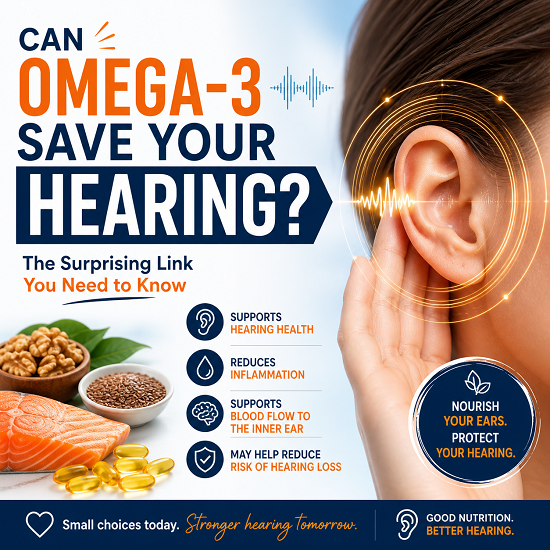
Can Omega-3 Save Your Hearing? The Surprising Link You Need to Know
Hearing loss is becoming a growing health concern worldwide. In fact, millions of people are affected every year. Omega-3 is mainly due to constant exposure to loud environments and age-related changes. For example, people who work in noisy places or use headphones at high volume may face a higher risk.
However, what if something as simple as your diet could help protect your hearing? Today, many experts believe that nutrition plays an important role in overall ear health. Interestingly, recent research suggests that Omega-3 fatty acids may play a surprising role.
These healthy fats may help preserve ear function and support blood flow to the inner ear. As a result, they may reduce the risk of hearing loss over time. While more research is needed, adding Omega-3-rich foods to your diet could be a simple and effective step toward better hearing health.
What Is Hearing Loss and Why Does It Happen?
Hearing loss occurs when there is damage to the inner ear, the auditory nerve, or the brain’s sound-processing centers. In most cases, the most common type is sensorineural hearing loss. This type is often linked to aging, long-term noise exposure, or poor blood circulation.
For example, listening to loud music for long periods can harm the inner ear. Similarly, natural aging can slowly reduce hearing ability over time. In addition, poor blood flow may limit oxygen supply to the ear. As a result, hearing may become weaker or unclear.
Key causes include:
- Aging (presbycusis)
- Chronic exposure to loud noise
- Poor cardiovascular health
- Inflammation and oxidative stress
Moreover, many of these risk factors are influenced by your lifestyle. In particular, diet plays an important role. For example, certain nutrients can improve blood flow and help reduce inflammation. As a result, they may support overall ear health and lower the risk of hearing loss.
Early Signs of Hearing Loss: Omega-3 for Hearing Health
At first, hearing loss can be hard to notice. However, there are some common signs to watch for. For example, you may find it hard to follow conversations. This is more common in noisy places. You may also ask people to repeat themselves more often. Sometimes, sounds may seem dull or unclear.
Another sign is turning up the volume of the TV or phone more than usual. Over time, these small changes can become easy to notice. So, it is important to pay attention early. If you act early, you can take steps to protect your hearing and avoid further problems.
What Are Omega-3 Fatty Acids for Hearing Health?
Omega-3 fatty acids are essential fats. In other words, your body cannot make them on its own. Therefore, you must get them from food or supplements.
The main types include:
- EPA (Eicosapentaenoic acid)
- DHA (Docosahexaenoic acid)
- ALA (Alpha-linolenic acid)
In general, these fats support many body functions. For example, they help keep your heart and brain healthy.
Common sources of Omega-3s include:
- Fatty fish such as salmon, sardines, and mackerel
- Flaxseeds and chia seeds
- Walnuts
- Fish oil supplements
For this reason, adding these foods to your diet may support overall health, including your hearing.
The Link Between Omega-3 and Hearing Health
In recent years, studies show that Omega-3 fatty acids may help protect hearing. In simple terms, these healthy fats help your body work better.
1. Improved Blood Circulation
First, the inner ear needs a steady flow of oxygen-rich blood. Omega-3s support heart health and improve blood flow. As a result, they help protect the delicate parts of the ear. They also help carry nutrients that keep ear cells healthy.
2. Anti-Inflammatory Effects
In addition, long-term inflammation can harm the inner ear. Omega-3s have strong anti-inflammatory effects. So, they may lower this risk. This helps protect the tiny parts inside the ear.
What Does Research Say?
Several studies show that Omega-3s may help hearing. For example, a study in the American Journal of Clinical Nutrition found that people who ate fish twice a week had a lower risk of hearing loss. This shows that regular intake may help over time.
In addition, research from Harvard Medical School shows that Omega-3s help keep blood vessels healthy. As a result, blood flows better to the inner ear. This matters because the ear needs a steady supply of oxygen and nutrients.
Moreover, a study in the Journal of Nutrition found that Omega-3s may slow age-related hearing problems. In simple terms, they may help protect hearing as you age.
However, Omega-3s are not a cure. Instead, they work best as part of a healthy lifestyle. For best results, eat a balanced diet, stay active, and protect your ears from loud noise.
How Much Omega-3 Do You Need?
Health experts suggest a steady intake. For example, eat fatty fish at least twice a week. Good choices include salmon, sardines, and mackerel. These fish are rich in Omega-3s and easy to add to meals.
Alternatively, you can take supplements if your doctor advises it. Fish oil and plant-based options are easy to find. However, always follow the right dose.
Most importantly, stay consistent. In fact, small daily habits make a big difference over time. You do not need large amounts at once. Instead, regular intake works best.
Also, combine Omega-3s with a balanced diet. Eat fruits, vegetables, and whole grains. For example, add fresh salads, seasonal fruits, and simple home meals.
As a result, your body can absorb nutrients better. In addition, drink enough water and keep meals balanced. Over time, these habits support better health.
In the long run, these simple steps can improve your overall health, including your hearing.
Additional Tips to Protect Your Hearing
Omega-3s can help. However, they work best with healthy habits. So, follow these simple tips:
- First, avoid long exposure to loud noise
- Next, use ear protection in noisy places
- Also, control blood pressure and cholesterol
- In addition, stay physically active
- Finally, avoid smoking
For example, lower the volume when using headphones and take regular breaks. You can also choose quieter environments when possible. Over time, these small actions can make a big difference.
By doing this, you can better protect your hearing and support long-term ear health.
Are There Any Risks?
Omega-3s are safe for most people. However, some caution is needed.
- First, taking too much may thin your blood
- Also, supplements may interact with certain medicines
- Therefore, it is important to be careful
For example, people who take blood thinners should be extra cautious. In addition, high doses may cause mild side effects like stomach upset or nausea. For this reason, always talk to a doctor before starting supplements. This helps ensure the right dose and avoids any unwanted risks.
Final Thoughts
So, can Omega-3 save your hearing? The answer is hopeful, but not certain. Omega-3s may lower the risk of hearing loss. However, they work best with a healthy lifestyle.
In fact, your ears need good nutrition, just like your heart and brain. So, better food choices today can support your health. For example, add fish, nuts, and seeds to your meals.
At the same time, protect your ears from loud sounds and stay active. These habits are simple but helpful.
In the long run, these small steps may help keep your hearing strong for years to come.
References:
https://www.mayoclinic.org/diseases-conditions/hearing-loss/symptoms-causes/syc-20373072
https://my.clevelandclinic.org/health/diseases/sensorineural-hearing-loss
https://www.healthline.com/health/sensorineural-hearing-loss
https://audiologists.org/resources/conditions/what-is-sensorineural-hearing-loss
Medications that have been suggested by doctors worldwide are available on the link below
https://mygenericpharmacy.com/category/products/allergy-relief