Browsed by
Category: Tuberculosis

The Truth About Tuberculosis: Symptoms, Prevention & Effective Treatments

The Truth About Tuberculosis: Symptoms, Prevention & Effective Treatments

Introduction

Tuberculosis (TB) is a serious infectious disease that continues to affect millions of people worldwide. It mainly targets the lungs but can also damage other parts of the body. Understanding tuberculosis symptoms, prevention, and effective treatments is essential for early diagnosis and better recovery. Although TB can be dangerous, it is both preventable and curable with the right approach. Therefore, awareness plays a key role in controlling this disease.


What Is Tuberculosis?

Tuberculosis is caused by a bacterium called Mycobacterium tuberculosis. It spreads through the air when an infected person coughs, sneezes, or speaks. In most cases, TB affects the lungs. However, it can also affect the brain, spine, and kidneys. As a result, early detection becomes very important.


Common Symptoms of Tuberculosis

Recognizing TB symptoms early can help prevent complications. The most common signs include:

  • Persistent cough lasting more than two weeks
  • Chest pain
  • Coughing up blood
  • Fever and night sweats
  • Unexplained weight loss
  • Fatigue

Moreover, these symptoms often develop slowly. Therefore, many people ignore them until the condition worsens.


How Tuberculosis Spreads

TB spreads through tiny airborne droplets. When a person with active TB coughs or sneezes, bacteria enter the air and can infect others. However, not everyone exposed to TB becomes sick. A strong immune system can fight the bacteria. On the other hand, people with weak immunity are at higher risk.


Types of Tuberculosis

There are two main types of TB:

1. Latent TB

In latent TB, the bacteria remain inactive in the body. People do not feel sick and cannot spread the infection.

2. Active TB

In active TB, bacteria multiply and cause symptoms. This form is contagious and requires immediate treatment.


Effective Treatments for Tuberculosis

The good news is that TB can be treated successfully with proper medication. Treatment usually lasts between 6 to 9 months.

1. Antibiotic Therapy

Doctors prescribe a combination of antibiotics to kill TB bacteria. It is important to complete the full course to prevent relapse.

2. Directly Observed Therapy (DOT)

In this approach, healthcare providers monitor patients to ensure they take their medication regularly.

3. Drug-Resistant TB Treatment

Some TB strains resist standard drugs. In such cases, stronger medications and longer treatment are required.


Prevention Tips You Should Follow

Preventing TB is easier than treating it. You can reduce your risk by following these steps:

  • Get vaccinated with the BCG vaccine
  • Maintain good hygiene
  • Cover your mouth while coughing or sneezing
  • Avoid close contact with infected individuals
  • Ensure proper ventilation in living spaces

In addition, regular health checkups help detect TB early.

You should consult a doctor if you have a persistent cough lasting more than two weeks. Also, seek medical attention if you experience chest pain, fever, or unexplained weight loss. Early diagnosis improves treatment success and reduces the spread of infection.


Conclusion

Tuberculosis remains a major global health concern. However, with proper knowledge of tuberculosis symptoms, prevention, and effective treatments, it can be controlled effectively. Ultimately, awareness, early detection, and timely treatment can save lives and prevent the spread of this disease.


References:

https://my.clevelandclinic.org/health/diseases/11301-tuberculosis
https://www.who.int/news-room/fact-sheets/detail/tuberculosis
https://www.cdc.gov/tb/about/index.html
https://www.mayoclinic.org/diseases-conditions/tuberculosis/diagnosis-treatment/drc-20351256

Medications that have been suggested by doctors worldwide are available on the link below
https://mygenericpharmacy.com/category/disease/tuberculosis
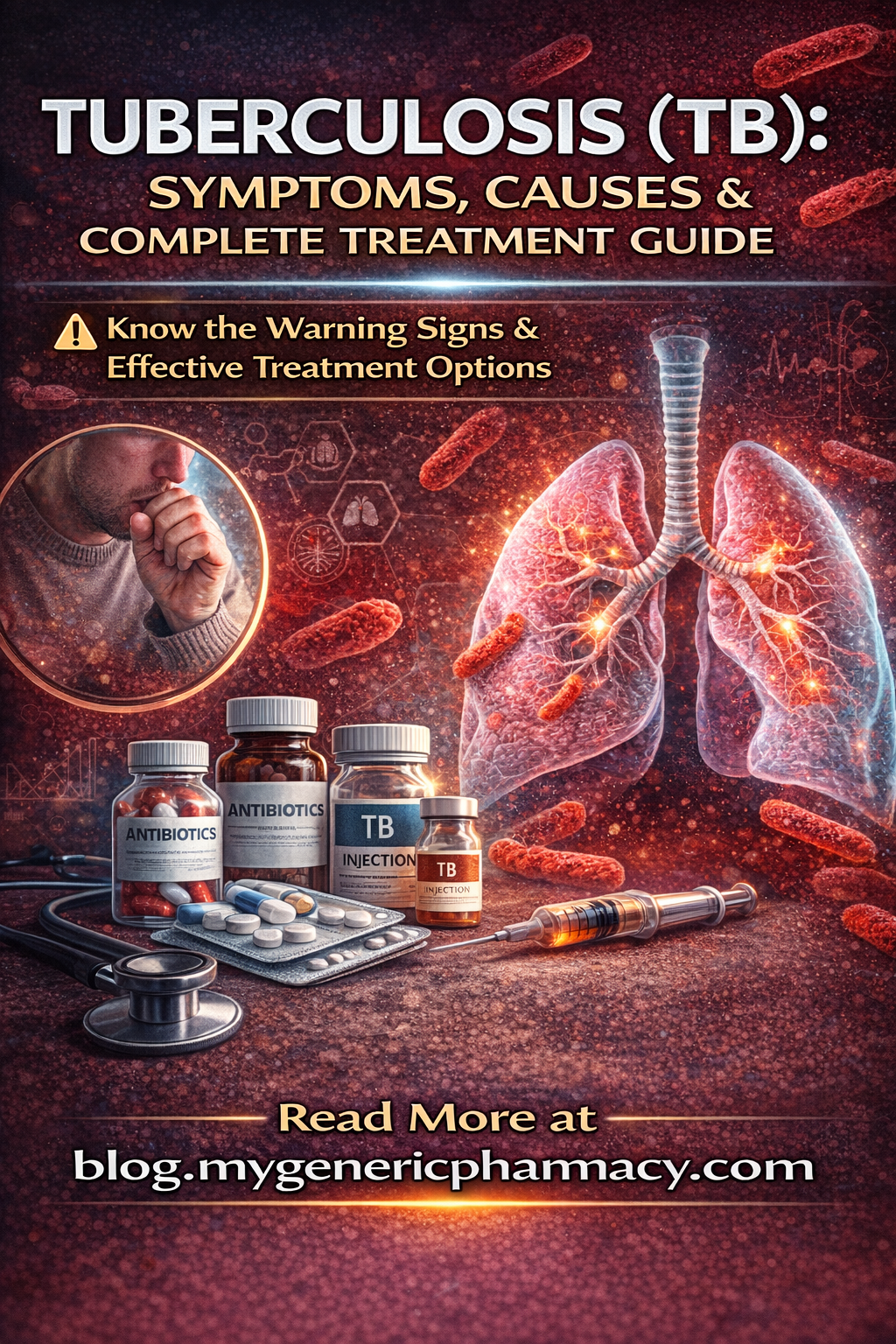
TB Alert: Warning Signs, Risk Factors & Proven Treatment Strategies

TB Alert: Warning Signs, Risk Factors & Proven Treatment Strategies

Tuberculosis Symptoms, Causes & Treatment Guide

Learn about tuberculosis (TB), including its causes, symptoms, diagnosis, treatment options, and prevention tips. Early detection can save lives.

Tuberculosis (TB) is a serious infectious disease caused by the bacterium Mycobacterium tuberculosis. It primarily affects the lungs (pulmonary TB) but can spread to other organs like the kidneys, spine, and brain (extrapulmonary TB). Despite being preventable and curable, TB remains one of the world’s deadliest infectious diseases, with approximately 10 million new cases and 1.5 million deaths annually.

How Tuberculosis Spreads

TB spreads through airborne transmission. When a person with active pulmonary TB coughs, sneezes, speaks, or sings, they release tiny infectious droplets into the air. Inhaling these droplets can lead to infection.

Important: TB is not spread through:

  • Shaking hands or sharing food
  • Touching bed linens or toilet seats
  • Sharing toothbrushes or kissing

Latent vs. Active TB: Understanding the Difference

Latent TB Infection

  • Bacteria present but inactive, walled off by the immune system
  • No symptoms and not contagious
  • About 5-10% will develop active disease if untreated
  • Treated with preventive therapy to reduce progression risk

Active TB Disease

  • Bacteria mmultiply causing illness
  • Contagious (if pulmonary)
  • Requires prompt treatment with a multi-drug regimen

Who Is at Risk?

Higher risk groups include:

  • Close contacts of infectious TB patients
  • People living with HIV (20-30x higher risk)
  • Those with weakened immunity (transplant recipients, cancer patients)
  • People with diabetes, silicosis, or chronic kidney disease
  • Malnourished individuals
  • Healthcare workers
  • Residents of high-burden countries (India, Indonesia, China, Philippines, Pakistan, Nigeria)
  • People experiencing homelessness or incarceration

Common Symptoms

Pulmonary TB Symptoms

  • Persistent cough lasting 3+ weeks, sometimes with blood-tinged sputum
  • Chest pain or pain with breathing/coughing
  • Unexplained weight loss
  • Fatigue and weakness
  • Fever and night sweats
  • Chills and loss of appetite

Extrapulmonary TB Symptoms

Symptoms vary depending on the affected organ:

  • Lymph nodes: Swollen, painless lumps (usually in the neck)
  • Kidneys: Blood in urine, flank pain
  • Spine (Pott’s disease): Back pain, stiffness, possible paralysis
  • Brain (TB meningitis): Headache, confusion, stiff neck

Diagnosis: Detecting TB

Screening Tests

  • Tuberculin Skin Test (Mantoux): Small fluid injection under the forearm skin; check for reaction in 48-72 hours
  • Interferon-Gamma Release Assays (IGRAs): Blood tests are more specific than the skin test

Diagnostic Tests for Active TB

  • Chest X-ray: Shows abnormalities in the lungs
  • Sputum microscopy: Detects acid-fast bacilli
  • Molecular tests (Xpert MTB/RIF Ultra): Detects TB and rifampicin resistance in 2 hours
  • Culture: Gold standard, but takes 2-8 weeks
  • Drug susceptibility testing: Determines resistance patterns

Treatment: Curing TB

Drug-Susceptible TB

Standard regimen includes 6 months of treatment:

PhaseDurationMedications
Intensive Phase2 monthsIsoniazid, Rifampin, Pyrazinamide, Ethambutol
Continuation Phase4 monthsIsoniazid, Rifampin

Directly Observed Therapy (DOT): Healthcare workers watch patients take medication to ensure adherence and prevent resistance.

Drug-Resistant TB

When bacteria resist standard medications, treatment becomes more complex:

  • MDR-TB: Resistant to isoniazid and rifampin (requires 9-18 months of treatment with second-line drugs)
  • XDR-TB: Resistant to even more medications (requires specialized regimens)
  • Newer regimens (BPaL/BPaLM): 6-month, all-oral options with improved success rates

Side Effects and Management

Common side effects include :

  • Rifampin: Orange urine/sweat (harmless)
  • Isoniazid: Peripheral neuropathy (prevent with vitamin B6)
  • Pyrazinamide: Joint pain, liver inflammation
  • Ethambutol: Vision changes (red-green color discrimination)
  • General: Nausea, rash, hepatitis

Report immediately: Yellowing eyes, dark urine, severe fatigue, vision changes, or persistent nausea.

Prevention Strategies

1. Infection Control

  • Early diagnosis and treatment (reduces transmission)
  • Proper ventilation in living/work spaces
  • N95 masks for healthcare workers
  • Cough etiquette (cover mouth, wear mask)

2. Vaccination

BCG vaccine (Bacille de Calmette-Guérin):

  • Protects infants and children from severe TB forms
  • Variable efficacy against pulmonary TB in adults
  • Widely used in high-burden countries
  • Can cause false-positive skin tests

3. Preventive Treatment for Latent TB

Options include :

  • 3HP: 3 months weekly isoniazid + rifapentine
  • 4R: 4 months daily rifampin
  • 1HP: 1 month daily isoniazid + rifapentine
  • 3HR: 3 months daily isoniazid + rifampin

Living with TB: What to Expect

During Treatment

  • Patients become non-infectious within 2-3 weeks of effective treatment
  • Continue medication exactly as prescribed for the full duration
  • Attend regular follow-up appointments
  • Never stop early, even if feeling better—this can cause relapse or resistance

Nutritional Support

  • High-protein, calorie-dense foods help recovery
  • Small, frequent meals if nausea occurs
  • A vitamin-rich diet supports immune function
  • Avoid alcohol (stresses the liver during treatment)

TB and HIV Co-Infection

TB is the leading cause of death among people with HIV. Integrated management includes :

  • Earlier antiretroviral therapy (ART) initiation
  • TB preventive treatment for all people with HIV
  • Careful management of drug interactions
  • Monitoring for immune reconstitution inflammatory syndrome (IRIS)

Global Progress and Challenges

The World Health Organization’s End TB Strategy aims to reduce TB deaths by 90% and incidence by 80% by 2030. Challenges include :

  • Funding gaps ($5.8 billion annual shortfall)
  • Drug-resistant TB
  • Health system weaknesses in high-burden countries
  • Stigma and discrimination
  • Impact of COVID-19 on TB services

Conclusion: A Curable Disease

Tuberculosis is preventable, treatable, and curable. With early detection, proper treatment adherence, and public health support, people with TB can fully recover and return to normal life. If you have symptoms like persistent cough, fever, night sweats, or unexplained weight loss, seek medical evaluation promptly.


References:

  1. World Health Organization. Tuberculosis fact sheet.
  2. Mayo Clinic. Tuberculosis – Symptoms and causes.
  3. Centers for Disease Control and Prevention. TB Treatment and Side Effects.
  4. WHO. Tuberculosis: Prevention and control.
  5. CDC. TB and HIV Coinfection.

Medications that have been suggested by doctors worldwide are available on the link below
https://mygenericpharmacy.com/category/disease/tuberculosis


Disclaimer: This article is for educational purposes only. If you suspect TB exposure or infection, consult a healthcare provider immediately.

The TB Times: Your Guide to Understanding, Preventing, and Overcoming Tuberculosis

The TB Times: Your Guide to Understanding, Preventing, and Overcoming Tuberculosis

Welcome to Tuberculosis Awareness & Education

Tuberculosis (TB) is not a disease of the past—it remains one of the world’s deadliest infectious diseases, yet it’s preventable, treatable, and curable. Whether you’re concerned about exposure, supporting someone through treatment, or interested in global health, this blog provides evidence-based information, dispels myths, and offers practical guidance for navigating the complexities of TB.

Understanding Tuberculosis: The Ancient Foe with Modern Challenges

What is Tuberculosis?

  • Causative agent: Mycobacterium tuberculosis (rarely M. bovisM. africanum)
  • Transmission: Airborne droplets from coughing, sneezing, speaking
  • Primary target: Lungs (pulmonary TB) but can affect any organ (extrapulmonary TB)
  • Global burden: 10 million new cases annually, 1.5 million deaths (2022)

The TB Spectrum: Infection vs. Disease

Latent TB Infection (LTBI):

  • Bacteria present but inactive, walled off by immune system
  • No symptoms, not contagious
  • 5-10% lifetime risk of progressing to active disease (higher with immunosuppression)
  • Diagnosed by: Positive TB skin test (TST) or interferon-gamma release assay (IGRA)
  • Treatment: Preventative therapy reduces progression risk by 60-90%

Active TB Disease:

  • Bacteria multiplying, causing illness
  • Contagious (if pulmonary)
  • Symptoms present (cough >3 weeks, fever, night sweats, weight loss)
  • Diagnosed by: Sputum tests, imaging, culture
  • Treatment: Multi-drug regimen for 6+ months

The Global TB Landscape: A Persistent Pandemic

TB Hotspots & Vulnerable Populations

  • High burden countries: India, Indonesia, China, Philippines, Pakistan, Nigeria
  • Urban centers: Crowding, poverty, healthcare access barriers
  • Vulnerable groups:
    • People living with HIV (20x higher TB risk)
    • Healthcare workers
    • Incarcerated populations
    • Migrants/refugees from high-burden countries
    • People experiencing homelessness
    • Substance users
    • Elderly, children under 5

The Syndemics: TB Co-Infections & Comorbidities

  • TB/HIV: Leading cause of death in people with HIV
  • Diabetes: Triples TB risk, worse treatment outcomes
  • Malnutrition: Increases susceptibility and mortality
  • Smoking & Air Pollution: Damage lung defenses
  • Mental Health: Depression common during long treatment

Diagnosis: Finding the Hidden Bacterium

Diagnostic Tools & Evolution

Traditional Methods (Still Essential):

  • Sputum Smear Microscopy: Acid-fast bacilli (AFB) staining
  • Chest X-ray: Cavities, infiltrates, effusions
  • Culture: Gold standard (takes 2-8 weeks)
  • Drug Susceptibility Testing (DST): Determines resistance

Modern Rapid Diagnostics:

  • Xpert MTB/RIF Ultra: Detects TB and rifampicin resistance in 2 hours
  • Line Probe Assays: Detect resistance to multiple drugs
  • Lateral Flow Urine LAM Test: For HIV-associated TB
  • Next-generation Sequencing: Comprehensive resistance profiling

Diagnostic Challenges:

  • Paucibacillary disease: Children, HIV+, extrapulmonary TB have fewer bacteria
  • Drug-resistant TB: Requires specialized testing
  • Access barriers: Cost, infrastructure, trained personnel shortages

The Treatment Journey: From First-Line to Last Resort

Drug-Susceptible TB Treatment

Standard Regimen (6 months):

Newer Shorter Regimens:

  • 4-month regimen (with higher dose rifapentine + moxifloxacin) approved for some adults
  • Pediatric formulations: Child-friendly dispersible tablets

Drug-Resistant TB: A Growing Crisis

Definitions:

  • Mono/Poly-resistant: Resistant to one/multiple first-line drugs
  • Multidrug-resistant (MDR-TB): Resistant to at least rifampin + isoniazid
  • Pre-extensively drug-resistant (pre-XDR): MDR + resistant to fluoroquinolone
  • Extensively drug-resistant (XDR-TB): MDR + resistant to fluoroquinolone + bedaquiline/linezolid

Treatment Evolution:

  • Old regimens: 18-24 months, toxic injectables, ~50% cure
  • New regimens (BPaLM/BPaL): 6 months, all-oral, >80% success
    • Bedaquiline (first new TB drug in 40 years)
    • Pretomanid
    • Linezolid (adjusted dose for toxicity management)
    • Moxifloxacin (if susceptible)

The Adherence Challenge: Why Treatment Fails

  • Lengthy duration: 6-24 months of daily medication
  • Side effects: Hepatotoxicity, neuropathy, psychiatric symptoms, QT prolongation
  • Stigma: Fear of disclosure affecting healthcare engagement
  • Structural barriers: Cost, transportation, conflicting work schedules
  • Solution: Patient-centered care, treatment supporters, digital adherence tools

Prevention Strategies: Breaking the Transmission Chain

Infection Control

Community Level:

  • Early diagnosis & treatment: Most infectious before diagnosis
  • Contact investigation: Testing exposed individuals
  • Treatment of LTBI: For high-risk contacts and populations

Institutional Settings (Hospitals, Prisons, Shelters):

  • Administrative controls: Triage, isolation, rapid diagnosis
  • Environmental controls: Ventilation, UV germicidal irradiation
  • Respiratory protection: N95 masks for healthcare workers

Vaccination: BCG’s Role & Future

  • BCG Vaccine: 100 years old, protects children from severe forms (miliary TB, meningitis)
  • Limitations: Variable efficacy against pulmonary TB in adults
  • Pipeline: 16+ vaccine candidates in clinical trials (preventive and therapeutic)

Biomedical Prevention

  • TB Preventive Treatment (TPT): 3HP (3 months weekly isoniazid+rifapentine), 4R (4 months daily rifampin), 1HP (1 month daily isoniazid+rifapentine)
  • Targeted TPT: Household contacts, people with HIV, transplant recipients, silicosis patients

Living with TB: The Patient & Caregiver Experience

Navigating Treatment Side Effects

Common Side Effects & Management:

  • Orange bodily fluids: Normal with rifampin
  • Hepatotoxicity: Monthly LFT monitoring, avoid alcohol
  • Peripheral neuropathy: Pyridoxine (B6) supplementation
  • Skin rash: Antihistamines, may require regimen adjustment
  • Psychiatric effects: Depression, psychosis (especially with cycloserine)
  • Vision changes: Ethambutol toxicity (red-green color blindness)

Nutritional Support:

  • Calorie-dense foods: Weight loss is common
  • Small, frequent meals: Nausea management
  • Vitamin-rich diet: Supports immune function
  • Avoid: Alcohol (liver strain), grapefruit (interferes with medications)

Mental Health & Stigma

  • TB stigma: One of the oldest and most persistent disease stigmas
  • Social isolation: Due to infectiousness fears
  • Financial stress: Lost income during treatment
  • Support strategies: Counseling, peer support groups, addressing internalized stigma

Returning to Work & Normal Life

  • Infectious period: Typically 2-3 weeks after starting effective treatment (confirmed by negative sputum)
  • Work accommodations: May need adjusted duties initially
  • Legal protections: Vary by country (anti-discrimination laws)

Pediatric TB: Special Considerations

Unique Challenges in Children

  • Diagnosis difficulty: Hard to produce sputum, nonspecific symptoms
  • Severe forms more common: Meningitis, disseminated disease
  • Dosing complexities: Weight-based calculations, palatable formulations
  • Transmission source: Usually adult household member

Treatment Advances for Children

  • Child-friendly formulations: Dispersible, flavored tablets
  • Shorter regimens: 4-month option for non-severe cases
  • Preventive therapy: For exposed children under 5 (high progression risk)

TB/HIV Co-Infection: The Deadly Duo

Integrated Management

  • “The Three I’s”: Intensified case finding, Isoniazid preventive therapy, Infection control
  • ART timing: Start ART within 2 weeks of TB treatment (except CNS TB)
  • Drug interactions: Rifampin lowers levels of many ARVs (dose adjustments needed)
  • Immune reconstitution inflammatory syndrome (IRIS): Temporary worsening when starting ART

Prevention in PLHIV

  • Universal TPT: Recommended for all people with HIV in high-burden settings
  • Regular screening: Symptom checklist at every healthcare visit
  • Infection control: In HIV care settings

Innovations & Research Frontiers

New Diagnostics in Development

  • Non-sputum-based tests: Breath, blood, urine biomarkers
  • Point-of-care molecular tests: Faster, cheaper, simpler
  • Artificial intelligence: Reading chest X-rays for TB screening

Drug Pipeline (2024+)

  • Phase III: Delamanid (for children), sutezolid
  • Phase II: Telacebec (Q203), TBAJ-876 (bedaquiline analog)
  • Novel targets: Cell wall synthesis, energy metabolism, proteasome inhibition

Vaccine Pipeline

  • M72/AS01E: First promising preventive vaccine in 100 years (~50% efficacy)
  • Vaccae (therapeutic): Adjunct to drug treatment
  • mRNA vaccines: Early research stage

Digital Health & TB

  • Video DOT: Remote treatment observation via smartphone
  • Digital adherence technologies: Smart pill boxes, ingestible sensors
  • Telemedicine consultations: For side effect management, follow-up

Global Elimination Efforts: The WHO End TB Strategy

2035 Targets

  • 90% reduction in TB deaths
  • 80% reduction in TB incidence
  • No catastrophic costs for TB-affected families

Key Interventions

  • Integrated, patient-centered care
  • Bold policies and supportive systems
  • Intensified research and innovation
  • Social protection and poverty alleviation

Challenges to Elimination

  • Funding gaps: $5.8 billion annual shortfall for TB services
  • Political will: TB lacks visibility despite burden
  • Health system weaknesses: Especially in high-burden countries
  • Antimicrobial resistance: Threatening treatment gains

Myth Busting: TB Truths vs. Fiction

❌ Myth: TB is a disease of the past.
✅ Fact: TB kills 4,000 people daily—more than HIV and malaria combined.

❌ Myth: Only homeless or incarcerated people get TB.
✅ Fact: Anyone can get TB. Crowded conditions increase risk, but infection crosses all demographics.

❌ Myth: TB is hereditary.
✅ Fact: TB is infectious, not genetic. Family clusters occur due to transmission, not inheritance.

❌ Myth: Once you start treatment, you’re immediately non-contagious.
✅ Fact: It typically takes 2-3 weeks of effective treatment to become non-contagious.

❌ Myth: BCG vaccine provides lifetime protection.
✅ Fact: BCG mainly protects children from severe forms. Protection wanes and is unreliable for adult pulmonary TB.

❌ Myth: Drug-resistant TB is untreatable.
✅ Fact: New regimens cure >80% of drug-resistant TB. Treatment is challenging but possible.


Critical Medical Disclaimer

*This blog provides educational information about tuberculosis but is not a substitute for medical care. If you have symptoms of TB (cough >3 weeks, fever, night sweats, weight loss), seek medical evaluation immediately. TB diagnosis and treatment require medical supervision. Never self-treat or share TB medications.*

Public Health Note: TB is a reportable disease in most countries. Healthcare providers are required by law to report cases to public health authorities to ensure contact investigation and prevent further spread.