Everything You Need to Know About Seizure Medications and Safety
Seizure medications help control seizures and improve the quality of life for people with epilepsy and other brain conditions. These medicines can work very well when patients take them correctly and regularly. However, improper use may increase the risk of side effects or other health problems. Therefore, patients and caregivers should understand how these medicines work, their possible side effects, and important safety tips.
What Are Seizure Medications?
Seizure medications, also called anticonvulsants or anti-epileptic drugs (AEDs), help prevent or reduce seizures. These medicines work by stabilizing electrical activity in the brain. As a result, they help control abnormal nerve signals that can trigger seizures.
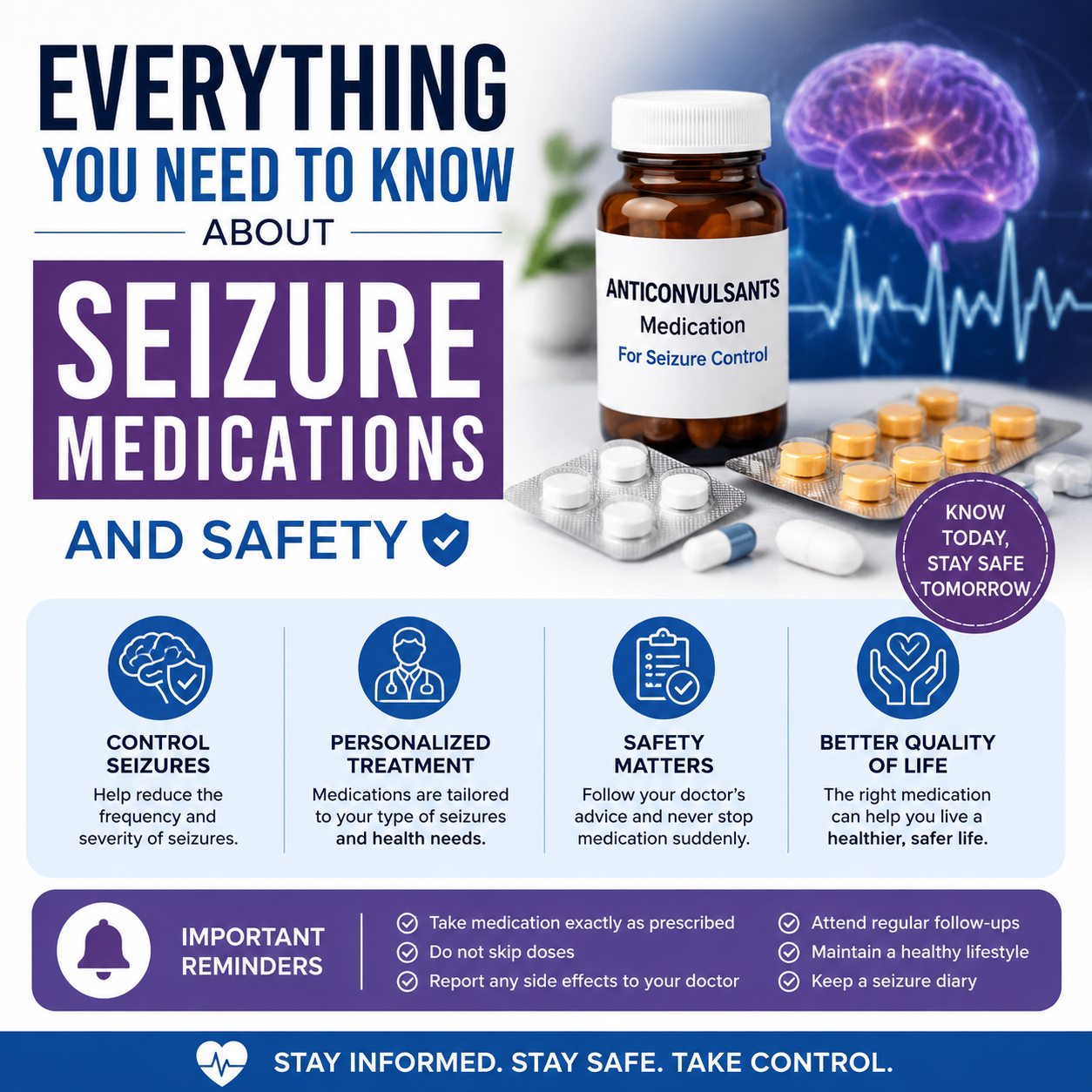
In many cases, seizure medications help people with epilepsy live active and independent lives. However, treatment results may vary from person to person. In addition, factors such as seizure type, age, overall health, and response to medication can affect how well the treatment works.
Why Seizure Medications Are Important
Seizures can affect brain function, consciousness, movement, and behavior. In severe cases, uncontrolled seizures may cause injuries, accidents, or life-threatening complications. Therefore, patients should take seizure medications exactly as prescribed.
In addition, proper seizure control may help:
- Reduce seizure frequency
- Prevent seizure-related injuries
- Improve daily functioning
- Support mental and emotional well-being
- Enhance quality of life
Furthermore, long-term seizure management may reduce emergency hospital visits and improve overall health outcomes.
Common Types of Seizure Medications
Several seizure medications are available. Therefore, doctors choose treatment based on the type of seizure and the patient’s individual needs. In addition, factors such as age, overall health, and response to medication may also affect the treatment plan.
Carbamazepine
Carbamazepine is commonly used to treat focal seizures and some generalized seizures. It works by reducing abnormal electrical activity in the brain. As a result, it helps control seizures and improve brain stability.
Valproic Acid
Valproic acid is often prescribed for several types of seizures, including absence seizures and generalized seizures. In addition, doctors may also use it to help prevent migraines and manage bipolar disorder. As a result, this medicine can support treatment for multiple neurological and mental health conditions.
Lamotrigine
Lamotrigine is widely used because it may cause fewer side effects in some patients. Moreover, it can help treat both focal and generalized seizures. As a result, many doctors prescribe it for long-term seizure management.
Levetiracetam
Levetiracetam is a commonly prescribed seizure medication because it works well and has a simple dosing schedule. In many cases, patients tolerate it well. As a result, doctors often use it for both new and ongoing seizure treatment.
Phenytoin
Phenytoin has been used for decades to help control seizures. However, long-term use may require careful monitoring because it can cause side effects. Therefore, doctors often check patients regularly to ensure safe and effective treatment.
How Seizure Medications Work
The brain communicates through electrical signals between nerve cells. However, during a seizure, these signals become abnormal and excessive. As a result, seizure activity occurs. Seizure medications help calm this abnormal brain activity.
Some medications reduce nerve cell excitability, while others increase the activity of calming brain chemicals. Consequently, seizures become less likely to occur.
Possible Side Effects of Seizure Medications
Like all medicines, seizure medications may cause side effects. However, not everyone experiences them, and many side effects can be managed with medical guidance.
Common side effects include:
- Drowsiness
- Dizziness
- Fatigue
- Nausea
- Blurred vision
- Headache
- Weight changes
- Mood changes
- Difficulty concentrating
In some cases, more serious side effects may occur, such as liver problems, allergic reactions, skin rashes, or blood disorders. Therefore, patients should immediately report unusual symptoms to a healthcare provider.
Important Safety Tips for Seizure Medications
Proper medication safety is essential for effective seizure control and overall well-being.
Take Medication Exactly as Prescribed
Skipping doses or suddenly stopping seizure medications can trigger seizures. Therefore, patients should follow their doctor’s instructions carefully. In addition, they should take their medicine regularly to help maintain stable seizure control and reduce the risk of complications.
Do Not Stop Medication Abruptly
Suddenly stopping seizure medication may increase the risk of severe seizures or status epilepticus, which is a medical emergency. Therefore, patients should only change their dosage under medical supervision. In addition, regular follow-up care can help ensure safe and effective treatment.
Attend Regular Medical Checkups
Routine blood tests and health evaluations may be necessary to monitor medication levels and detect side effects early. As a result, doctors can adjust treatment when needed and help ensure safe and effective seizure control.
Avoid Alcohol and Recreational Drugs
Alcohol and certain drugs may interfere with seizure medications or increase the risk of seizures. Therefore, patients should avoid these substances whenever possible. In addition, they should talk with their doctor before taking any new medicine, supplement, or herbal product.
Inform Doctors About Other Medicines
Some medications and supplements can interact with seizure medicines. As a result, these interactions may affect how well the treatment works or increase the risk of side effects. Therefore, patients should always inform healthcare providers about all medicines, supplements, and herbal products they are taking.
Maintain Good Sleep Habits
Sleep deprivation may trigger seizures in some people. Therefore, getting enough rest is an important part of seizure management. In addition, good sleep habits may help reduce seizure frequency and support overall brain health.
What to Do If a Seizure Occurs
Even with treatment, seizures may still happen occasionally. During a seizure:
- Stay calm
- Protect the person from injury
- Move dangerous objects away
- Turn the person onto their side if possible
- Do not place anything in the mouth
- Seek emergency help if the seizure lasts longer than five minutes
In addition, caregivers should learn basic seizure first aid to respond safely and effectively.
When to Seek Medical Attention
Immediate medical care may be necessary if:
- Seizures become more frequent
- A seizure lasts more than five minutes
- Breathing problems occur
- Severe medication side effects develop
- Loss of consciousness continues after the seizure
Prompt medical attention may help prevent serious complications.
Conclusion
Seizure medications are essential for controlling seizures and improving quality of life. Although these medicines can be highly effective, patients must use them properly and attend regular medical checkups to ensure safety. Furthermore, understanding possible side effects, medication interactions, and lifestyle precautions can help patients manage epilepsy more successfully.
In addition, healthy habits and ongoing medical care play an important role in seizure management. As a result, many people living with seizures can lead safer, healthier, and more active lives.