Everything You Need to Know About Glaucoma
Glaucoma is a serious eye disease. It can slowly damage your vision. The disease often develops when pressure builds up inside the eye. This pressure may harm the optic nerve. The optic nerve sends signals from the eye to the brain. Because of this damage, vision problems can occur over time. In some cases, glaucoma may lead to blindness. However, early treatment can help protect eyesight. Regular eye exams are also important. They can help doctors find the disease before serious damage occurs.
What Is Glaucoma?
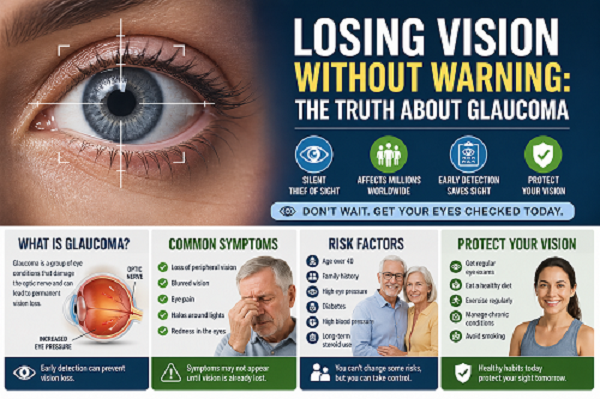
Glaucoma is a group of eye diseases that can damage the optic nerve. In most cases, this damage happens because pressure builds up inside the eye. This pressure is called intraocular pressure. However, some people may still develop it even when their eye pressure stays normal. Therefore, regular eye exams are important for early detection and treatment.
In most cases, it develops slowly over time. Because of this, many people do not notice symptoms in the early stages. In addition, vision changes often happen very slowly and may be easy to ignore. As a result, it is often called the “silent thief of sight.” Therefore, regular eye exams are important because they can help detect the condition early and protect your vision.
Types of Glaucoma
There are different types of Glaucoma, and each type affects the eyes in a different way. Some types develop slowly over time, while others may appear suddenly. In addition, certain forms can cause clear symptoms, but some may not show any signs in the early stages. Because of this, many people may not realize they have glaucoma. Therefore, understanding the different types is important. Early diagnosis and proper treatment can help protect vision and reduce the risk of blindness.
Open-Angle Glaucoma
This is the most common type of Glaucoma. It develops slowly when the eye’s drainage system does not work properly. Because of this, fluid builds up inside the eye, and pressure rises over time.
In the early stages, most people do not notice any symptoms. However, vision damage may slowly become worse if the condition is not treated. In many cases, side vision is affected first. As a result, the disease can be difficult to detect early. Therefore, regular eye checkups are very important. Early diagnosis and treatment can help protect vision and lower the risk of serious eye damage.
Angle-Closure Glaucoma
This type of Ocular Hypertension happens when the drainage angle in the eye becomes blocked suddenly. As a result, fluid cannot drain normally, and eye pressure rises very fast. Because of this, symptoms can appear quickly and become severe within a short time.
Symptoms may include:
- Severe eye pain
- Blurred vision
- Headache
- Nausea and vomiting
- Red eyes
- Seeing halos around lights
In many cases, these symptoms appear without warning. In addition, the condition can worsen very quickly if treatment is delayed. Therefore, angle-closure Ocular Hypertension is a medical emergency and needs immediate treatment to help prevent permanent vision loss.
Normal-Tension Glaucoma
In this type of Glaucoma, the optic nerve becomes damaged even when eye pressure remains normal. Although the exact cause is not fully understood, doctors believe poor blood flow to the optic nerve may play a role. In some cases, the optic nerve may also be more sensitive to damage. As a result, vision loss can still occur without high eye pressure.
Congenital Glaucoma
This rare type of glaucoma affects babies and young children. In most cases, it happens because the eye’s drainage system does not develop properly before birth. As a result, fluid cannot drain out of the eye normally. This causes pressure to build up inside the eye. Over time, the increased pressure can damage the optic nerve and affect vision.
Causes of Glaucoma
Glaucoma mainly develops when fluid inside the eye cannot drain properly. As a result, pressure builds up inside the eye and may damage the optic nerve over time.
Several factors can increase the risk, including:
- High eye pressure
- Aging
- Diabetes
- High blood pressure
- Eye injuries
Although anyone can develop it, older adults are generally at higher risk. Regular eye exams are important for early detection and proper treatment.
Common Symptoms
Symptoms may depend on the type and stage of it.
Early Symptoms
In many cases, early Ocular Hypertension does not cause clear symptoms. As a result, many people may not know they have the condition. Therefore, regular eye exams are very important for early detection.
Later Symptoms
As it gets worse, symptoms may include:
- Loss of side vision
- Blurred vision
- Trouble seeing in low light
- Eye pain
- Redness in the eyes
- Headaches
Therefore, early diagnosis and timely treatment are important for protecting eye health.
How Is Diagnosed
Doctors use several eye tests to diagnose it. These tests help check eye pressure and the health of the optic nerve. As a result, doctors can detect the condition early and start treatment if needed.
Common tests include:
Eye Pressure Test
This test measures the pressure inside the eye. High eye pressure may increase the risk of Glucoma.
Visual Field Test
This test checks for blind spots or loss of side vision. As it progresses, side vision may slowly become weaker.
Can Glaucoma be prevented?
Glaucoma isn’t preventable, but early detection and treatment can manage pressure inside your eye and help prevent or delay vision loss. There are a few main ways that can happen.
If you have glaucoma, the best thing you can do is follow your eye care specialist’s guidance on treating and managing this condition. They may also recommend making certain changes to your life, habits, or routine.
Treatment Options for Glaucoma
Although glaucoma cannot usually be cured, treatment can help slow down or prevent further vision loss.
Eye Drops
These medicines either reduce fluid production or help fluid drain properly from the eye.
Oral Medications
Sometimes, doctors may prescribe tablets if eye drops alone do not control eye pressure effectively.
Laser Treatment
Laser treatment may help improve fluid drainage from the eye. As a result, eye pressure can be reduced, and vision damage may slow down.
Surgery
In severe cases, surgery may be needed to create a new drainage pathway for eye fluid. Following the doctor’s treatment plan is very important because it can help protect vision and reduce the risk of permanent eye damage.
Who Should Get Tested for Glaucoma?
You may need regular testing if you:
- Are over 40 years old
- Have diabetes or high blood pressure
- Use steroid medicines regularly
- Have had previous eye injuries
Living With Glaucoma
Living with glaucoma may require long-term care and regular monitoring.
- Attend follow-up appointments
- Report new symptoms quickly
- Maintain a healthy lifestyle
Conclusion
Glaucoma is a serious eye disease that can lead to permanent vision loss if it is not treated on time. In many cases, symptoms develop slowly, so people may not notice the condition in the early stages. Therefore, regular eye exams are very important for early detection and treatment. By learning about it and taking preventive steps, you can support better eye health and lower the risk of blindness.
References:
- World Health Organization (WHO) – Blindness and Vision Impairment
- National Eye Institute – Glaucoma
- American Academy of Ophthalmology – Glaucoma Overview
- Mayo Clinic – Symptoms and Causes
- Cleveland Clinic – Types, Symptoms & Treatment
- MedlinePlus – Glaucoma
- Johns Hopkins Medicine – Glaucoma Information
- NHS – Glaucoma