
Alzheimer’s Blood Test: A New Era in Predicting Symptom Onset
Alzheimer’s Blood Test: Predicting Symptoms Earlier
A new blood test may predict when Alzheimer’s symptoms could begin. Discover how this breakthrough could enhance early detection and inform future treatment strategies.
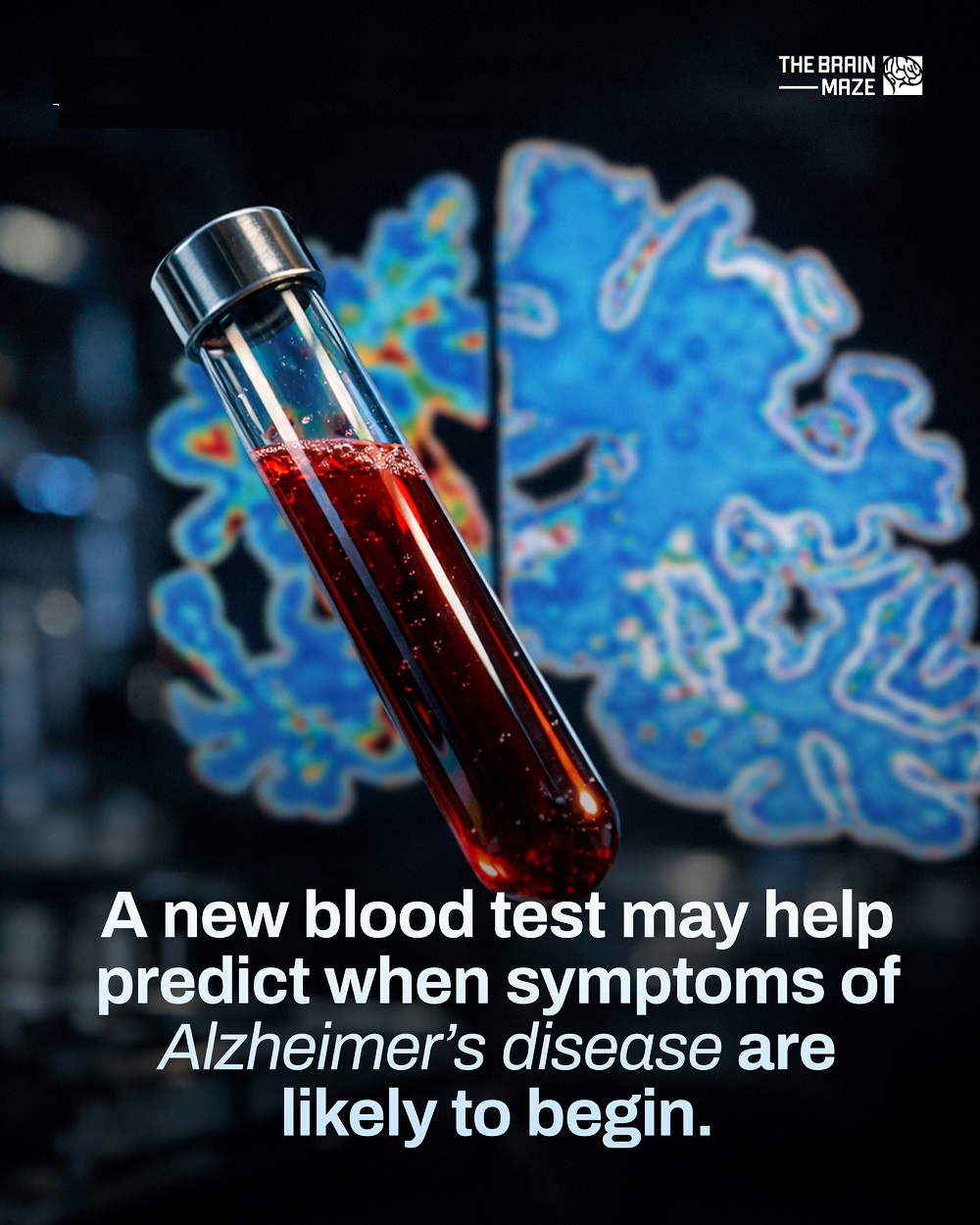
For decades, one of the most frustrating aspects of Alzheimer’s disease has been the inability to predict when symptoms will appear. By the time memory loss and confusion become evident, irreversible brain damage has already occurred. But a revolutionary new approach using a simple blood test may change that entirely.
Recent research published in Nature Medicine demonstrates that a single blood test measuring a protein called plasma phosphorylated tau at position 217 (p-tau217) can estimate when cognitively healthy individuals are likely to develop Alzheimer’s symptoms—with remarkable accuracy. This breakthrough could transform how we approach Alzheimer’s diagnosis, treatment, and clinical research.
The Science Behind the Test
What Is P-tau217?
P-tau217 is a specific form of tau protein that accumulates in the brains of people with Alzheimer’s disease. When measured in blood, its levels correlate closely with the buildup of both amyloid plaques and tau tangles—the hallmark brain changes of Alzheimer’s
Unlike traditional diagnostic methods like PET scans or spinal taps, which are expensive, invasive, and often inaccessible, a blood test offers a simple, scalable, and cost-effective alternative .
How the “Clock” Model Works
Researchers developed statistical models that track how p-tau217 levels change over time and relate these changes to future symptom onset. Using data from over 900 participants in two large observational studies (the Knight Alzheimer’s Disease Research Center and the Alzheimer’s Disease Neuroimaging Initiative), they created “clock” models that could predict the age at which symptoms would appear.
Key finding: The models predicted symptom onset with a median absolute error of just 3-4 years
What the Research Found
Age Matters: Faster Progression in Older Adults
One of the most striking discoveries was that the interval between biomarker abnormality and clinical symptoms varies dramatically by age .
| Age When P-tau217 Becomes Abnormal | Time Until Symptom Onset |
|---|---|
| Around age 60 | Approximately 20 years |
| Around age 80 | Approximately 10 years |
This suggests that age-related changes in the brain influence how quickly Alzheimer’s pathology translates into cognitive decline.
High Accuracy Across Multiple Assays
The clock models performed consistently across several commercially available plasma p-tau217 assays, including those from C2N Diagnostics, Janssen, ALZpath, and Fujirebio. This consistency is crucial for widespread clinical adoption.
Diagnostic Performance
P-tau217 has demonstrated exceptional accuracy in detecting Alzheimer’s pathology:
- AUC values greater than 0.93 in detecting Alzheimer’s pathology
- 91% positive predictive value
- Plasma p-tau217 can distinguish Alzheimer’s from other neurodegenerative disorders with 89-98% accuracy
- Can identify pathological changes 15-20 years before symptom onset, with levels increasing over 8.5% annually during preclinical stages
Why This Matters
1. Earlier Intervention
New disease-modifying treatments for Alzheimer’s are most effective in the earliest stages of the disease . A blood test that predicts when symptoms will appear could identify candidates for preventive therapy years before cognitive decline begins.
2. More Efficient Clinical Trials
One of the biggest challenges in Alzheimer’s research is enrolling participants who are likely to develop symptoms during the trial period. These clock models can help researchers select participants most likely to show progression, making trials faster, smaller, and more cost-effective.
3. Personalized Medicine
“If we can predict the onset of Alzheimer’s symptoms with high enough accuracy, these models could be useful in planning or considering different interventions on an individual level,” said senior author Dr. Suzanne Schindler of Washington University in St. Louis.
Current Limitations and Caveats
Not Yet Ready for Routine Clinical Use
Despite the promising results, researchers emphasize that these models are currently research tools, not clinical tests.
“Currently, we do not recommend that cognitively unimpaired individuals have %p-tau217 blood tests because of potential legal and ethical issues,” Dr. Schindler cautioned
Limitations of Current Research
- The models apply only to participants with p-tau217 values within a defined range.
- The study population was predominantly non-Hispanic White, limiting generalizability.y
- Assay standardization remains a challenge across different platforms
The Need for Further Validation
“We do not yet know how long it will be until these tests are available for clinical use. They need to be tested in long-term, large-scale studies,” noted Maria C. Carrillo, PhD, chief science officer of the Alzheimer’s Association.
Beyond P-tau217: Other Promising Blood Biomarkers
While p-tau217 is currently the star player, researchers are investigating other blood-based markers that may complement it:
A recent study from the NIH-funded team at The Scripps Research Institute identified a panel of three proteins—C1QA, CLUS, and ApoB—that could accurately distinguish Alzheimer’s stages based on structural changes invisible to traditional tests.
The Future of Alzheimer’s Diagnosis
Finger Prick Testing
The DROP-AD project, published in Nature Medicine, has validated the detection of Alzheimer’s biomarkers using a simple finger prick—similar to diabetes blood sugar testing. This approach demonstrated 86% diagnostic accuracy for identifying amyloid pathology and could enable testing in remote areas and low-resource countries
Integration with Other Biomarkers
Future work will focus on improving accuracy by integrating p-tau217 with additional blood-based or imaging biomarkers, as well as factors reflecting individual patient complexity—coexisting brain diseases, medical comorbidities, and social influences .
Ethical Considerations
As these tests move toward clinical use, the medical community must grapple with important questions:
- Who should be tested?
- How should results be communicated?
- What support should accompany a predictive diagnosis?
- How do we ensure equitable access to testing and treatment?
Conclusion: Hope on the Horizon
The ability to predict Alzheimer’s symptom onset with a simple blood test represents a paradigm shift in how we approach this devastating disease. While not yet ready for routine clinical use, the rapid progress in blood-based biomarkers offers genuine hope for earlier diagnosis, more effective treatment, and ultimately, prevention.
As Dr. Schindler and her colleagues continue refining these models, we move closer to a future where Alzheimer’s can be detected and treated before it steals memories—giving patients and families precious time to plan, prepare, and pursue interventions that may slow or stop the disease.
The journey from research tool to clinical reality will require continued validation, standardization, and ethical consideration. But for the millions living with or at risk for Alzheimer’s, that journey offers something invaluable: hope.
References:
- Alzheimer’s Association. (2020). A Blood Test for Alzheimer’s? Markers for Tau Take Us a Step Closer. AAIC 2020.
- Benina N, et al. (2026). Plasma pTau 217:β-amyloid 1-42 ratio for enhanced accuracy. Brain.
- Borreli L. (2026). Blood Test Predicts Timing of Alzheimer’s Onset. Medscape.
- Ace Alzheimer Center Barcelona. (2026). DROP-AD project validates Alzheimer’s detection with a finger prick.
- Plasma p-tau217 study. (2026). Scientific Reports.
Medications that have been suggested by doctors worldwide are available on the link below:
https://mygenericpharmacy.com/category/disease/alzheimer-disease
Disclaimer: This article is for educational purposes only. Alzheimer’s disease testing and diagnosis should only be conducted under the supervision of qualified healthcare professionals.