Vitamin B12 Deficiency: Warning Signs, Causes & How to Restore Healthy Levels
Vitamin B12 Deficiency: Symptoms, Causes & Treatment
Learn about vitamin B12 deficiency, including its causes, symptoms, and treatment options. Discover how to restore healthy B12 levels and improve energy.
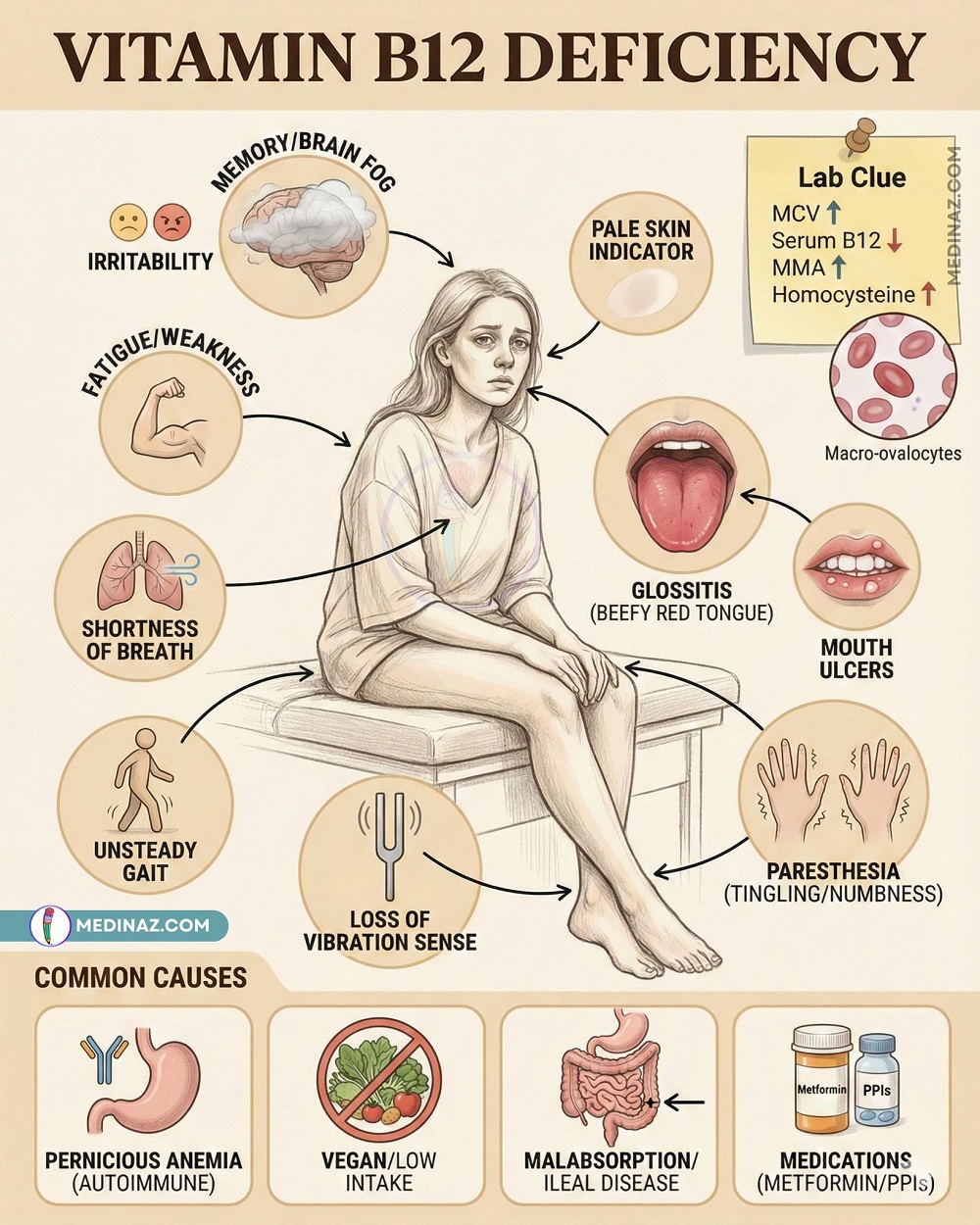
Vitamin B12 is a powerhouse nutrient that plays a critical role in keeping your body’s systems running smoothly. It’s essential for red blood cell formation, DNA synthesis, nerve function, and brain health. Yet despite its importance, vitamin B12 deficiency is surprisingly common—affecting an estimated 6% of people under 60 and nearly 20% of those over 60 in the United States and United Kingdom.
The challenge is that B12 deficiency develops gradually, and its early symptoms are often vague or mistaken for other conditions. Left untreated, it can lead to irreversible nerve damage and cognitive decline. The good news? It’s easily diagnosed and treated once recognized.
Why Vitamin B12 Matters
Vitamin B12, also called cobalamin, is unique among vitamins. It’s the only one that contains a metal ion (cobalt) and requires a special protein—intrinsic factor—produced in the stomach for absorption in the small intestine.
Key functions include:
- Red blood cell formation: B12 is essential for producing healthy red blood cells. Without it, red blood cells become large and abnormal (megaloblastic anemia)
- Nerve health: B12 maintains the myelin sheath—the protective coating around nerves. Damage to this coating disrupts nerve signaling
- DNA synthesis: Every cell in your body needs B12 to make DNA when dividing
- Brain function: B12 helps regulate mood and cognitive function through its role in neurotransmitter production
Causes of Vitamin B12 Deficiency
Dietary Factors
Inadequate intake is a common cause, particularly in:
- Vegans and strict vegetarians: B12 is naturally found almost exclusively in animal products (meat, fish, eggs, dairy). Plant foods don’t contain B12 unless fortified
- Malnourished individuals: Poor overall nutrition
- Breastfed infants of B12-deficient mothers can develop deficiency within months
Absorption Problems
Even with adequate dietary intake, many people can’t absorb B12 properly:
- Pernicious anemia: An autoimmune condition where the body attacks intrinsic factor-producing stomach cells. Accounts for 20-50% of B12 deficiency cases in adults
- Atrophic gastritis: Thinning of the stomach lining, common in older adults
- Gastrointestinal surgery: Gastric bypass, gastrectomy, or removal of parts of the small intestine
- Digestive disorders: Crohn’s disease, celiac disease, chronic pancreatitis
- Long-term PPI use: Acid-suppressing medications reduce B12 release from food
- Metformin: Diabetes medication can reduce B12 absorption
- Chronic alcohol use: Damages the stomach and intestinal lining
Other Causes
- Nitrous oxide exposure: Recreational use or repeated surgical anesthesia can inactivate B12
- Genetic mutations: Rare conditions affecting B12 transport or metabolism
Recognizing Symptoms
B12 deficiency affects multiple body systems. Symptoms develop gradually and worsen over time.
Anemia-Related Symptoms
- Fatigue and weakness (the most common early sign)
- Pale or jaundiced (yellowish) skin
- Shortness of breath, especially with exertion
- Heart palpitations
- Dizziness or lightheadedness
Neurological Symptoms
These can occur even without anemia and may become permanent if untreated:
- Numbness or tingling in hands and feet (peripheral neuropathy)
- Balance problems and difficulty walking
- Memory loss, confusion, or “brain fog.”
- Vision changes (optic neuropathy)
- Mood changes: Depression, irritability, anxiety
- Rarely: Hallucinations, psychosis
Other Symptoms
- Glossitis: Smooth, red, swollen tongue
- Mouth ulcers or cracks atthe corners of the mouth
- Decreased sense of taste
- Diarrhea or constipation
In Infants and Children
- Failure to thrive
- Developmental delays
- Movement disorders
- Irritability
Diagnosis: Confirming the Deficiency
Laboratory Tests
| Test | What It Measures | Notes |
|---|---|---|
| Serum B12 | Direct B12 level | Below 200 pg/mL indicates deficiency; 200-300 pg/mL borderline |
| MMA (Methylmalonic Acid) | Functional marker | Elevated in B12 deficiency; more sensitive than B12 alone |
| Homocysteine | Functional marker | Elevated in both B12 and folate deficiency |
| Complete Blood Count | Red blood cell size | Macrocytic (large) RBCs suggest B12/folate deficiency |
| Intrinsic Factor Antibodies | Autoimmune marker | Positive in pernicious anemia |
| Gastrin | Elevated in pernicious anemia | Reflects stomach acid production |
Important: Up to 50% of people with B12 deficiency have normal B12 levels on standard tests. If symptoms suggest deficiency despite normal B12, MMA, and homocysteine should be checked.
Treatment: Replenishing B12 Stores
Treatment Depends on Cause and Severity
Oral Supplementation
For mild deficiency due to dietary inadequacy:
- Typical dose: 1,000-2,000 mcg daily
- High-dose oral supplements work well even in some absorption issues because about 1% is absorbed passively without intrinsic factor
- Available over-the-counter
Injectable B12 (Hydroxocobalamin or Cyanocobalamin)
For severe deficiency, pernicious anemia, malabsorption, or neurological symptoms:
Typical regimen:
- Loading doses: 1,000 mcg intramuscularly every other day for 1-2 weeks (total 5-7 doses)
- Maintenance: 1,000 mcg monthly for life (for pernicious anemia or irreversible causes)
Alternative: Some patients transition to high-dose oral after initial injections.
Dietary Sources
Good food sources of B12:
- Organ meats: Liver, kidney (highest concentrations)
- Fish: Salmon, trout, tuna, clams, sardines
- Meat: Beef, lamb, poultry
- Dairy: Milk, yogurt, cheese
- Eggs: Especially yolks
- Fortified foods: Plant milks, breakfast cereals, nutritional yeast
For vegans: Fortified foods and supplements are essential. Don’t rely on unfortified plant sources.
Prevention Strategies
Who Should Be Screened?
Consider testing if you have:
- Age over 60 (routine screening recommended by some experts)
- Vegetarian or vegan diet (especially without supplementation)
- History of GI surgery (gastric bypass, gastrectomy)
- Autoimmune disorders (thyroid disease, type 1 diabetes, vitiligo—increased pernicious anemia risk)
- Long-term PPI or metformin use
- Unexplained neurological symptoms
Prevention Doses
- General population: Meets needs through diet
- At-risk but not deficient: 50-100 mcg daily or 2,000 mcg weekly oral supplement
- Post-gastric bypass: Lifelong supplementation typically 1,000 mcg monthly or 350-500 mcg daily
Special Populations
Pregnancy and Breastfeeding
B12 deficiency in pregnancy increases rthe isk of neural tube defects, preterm birth, and low birth weight. Requirements increase during pregnancy and lactation. Vegans and vegetarians need reliable supplementation.
Older Adults
Atrophic gastritis affects 20-50% of older adults, reducing the ability to absorb food-bound B12. Synthetic B12 (supplements, fortified foods) is absorbed better. Routine screening is recommended by many experts.
Pernicious Anemia Patients
Require lifelong B12 injections because the underlying autoimmune destruction of intrinsic factor-producing cells doesn’t resolve. Monthly injections are standard, though some manage with high-dose oral under monitoring.
Complications of Untreated Deficiency
Prolonged, untreated B12 deficiency can cause irreversible damage:
- Permanent nerve damage: Numbness, weakness, and balance problems may not fully resolve
- Cognitive decline: May mimic dementia; some improvement is possible, but not always complete
- Vision loss: Optic neuropathy
- Mobility impairment: Difficulty walking
- Increased fall risk: From neuropathy and balance problems
- Pregnancy complications: Neural tube defects
When to See a Doctor
Consult a healthcare provider if you experience:
- Unexplained fatigue, weakness
- Numbness or tingling in hands or feet
- Memory problems or confusion
- Smooth, red tongue
- Pale or yellowish skin
- History of gastric surgery or digestive disorder
Early treatment prevents permanent damage.
Conclusion: A Simple Solution for a Serious Problem
Vitamin B12 deficiency is common, easily diagnosed, and readily treated—yet it often goes unrecognized until significant damage occurs. The key takeaways:
- Know your risk: Age, diet, medications, and medical conditions all affect B12 status
- Recognize symptoms: Fatigue, neurological changes, and tongue changes warrant investigation
- Test appropriately: If suspected, ask your doctor for B12 level and, if borderline, MMA and homocysteine
- Treat effectively: Oral or injectable B12 works well; pernicious anemia requires lifelong treatment
- Prevent when possible: At-risk individuals should supplement proactively
With awareness and proper management, the consequences of B12 deficiency are entirely preventable—allowing you to maintain energy, nerve health, and cognitive function for years to come.
References:
- Cleveland Clinic. Vitamin B12 Deficiency: Causes, Symptoms & Treatment.
- Johns Hopkins Medicine. Vitamin B12 Deficiency Anemia.
- WebMD. Vitamin B12: What to Know.
- Mayo Clinic. Vitamin deficiency anemia – Symptoms and causes.
- National Institutes of Health. Vitamin B12 – Health Professional Fact Sheet.
- Healthline. Vitamin B12 Deficiency: Symptoms, Causes, Treatment.
Medications that have been suggested by doctors worldwide are available on the link below
https://mygenericpharmacy.com/category/disease/vitamins-enzymes
Disclaimer: This article is for educational purposes only. Consult your healthcare provider for proper diagnosis and treatment of vitamin B12 deficiency.