Diabetic Neuropathy & Vascular Damage: What You Need to Know to Stay Safe
Diabetes is more than just high blood sugar—it can quietly damage your body over time. Among the most serious complications are nerve damage (diabetic neuropathy) and blood vessel damage (vascular disease). If left unmanaged, these conditions can lead to pain, poor circulation, and even life-threatening complications.
In this guide, you’ll learn how diabetes affects your nerves and blood vessels—and most importantly, how to protect yourself.
What Is Diabetic Neuropathy?
Diabetic neuropathy is a type of nerve damage caused by prolonged high blood sugar levels. Over time, excess glucose harms the nerves, especially in the legs and feet.
Common Symptoms
- Tingling or burning sensation
- Numbness in hands or feet
- Sharp or stabbing pain
- Muscle weakness
- Loss of balance
These symptoms often start gradually and can worsen if blood sugar remains uncontrolled.
Understanding Vascular Damage in Diabetes
Diabetes also affects your blood vessels, reducing their ability to carry oxygen and nutrients efficiently. This leads to poor circulation, especially in the lower limbs.
Signs of Poor Circulation
- Cold feet or hands
- Slow-healing wounds
- Leg cramps while walking
- Skin discoloration
- Increased risk of infections
When blood flow is restricted, even small cuts can turn into serious infections.
How Diabetes Causes Nerve & Blood Vessel Damage
Several mechanisms contribute to these complications:
- High blood sugar (hyperglycemia) damages nerve fibers
- Inflammation weakens blood vessel walls
- Oxidative stress accelerates tissue damage
- Reduced blood flow deprives nerves of oxygen
Over time, this creates a cycle of worsening nerve and vascular health.
Why These Complications Are Dangerous
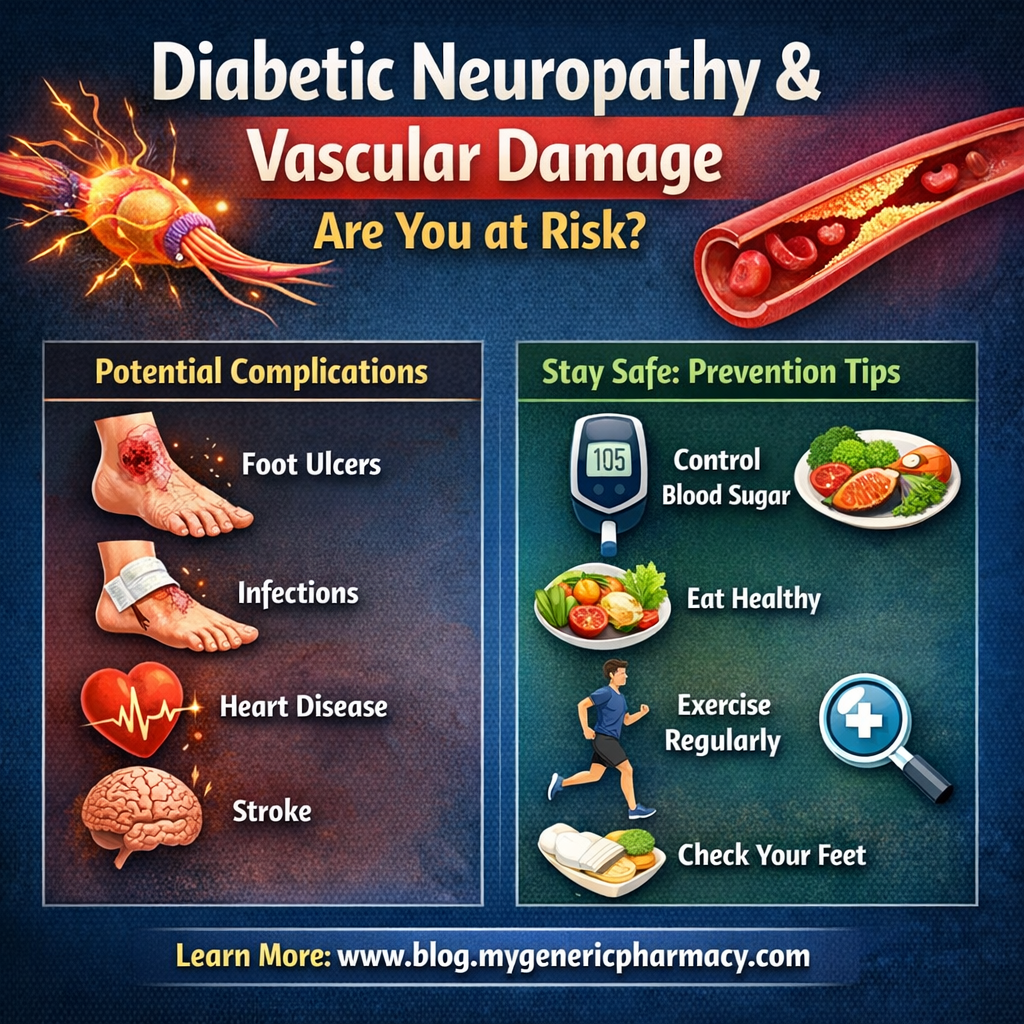
Ignoring diabetic neuropathy and vascular damage can lead to:
- Foot ulcers
- Infections and gangrene
- Amputations
- Heart disease
- Stroke
Early detection and management are critical to preventing these outcomes.
Prevention Tips: How to Stay Protected
The good news? You can significantly reduce your risk with the right steps.
1. Keep Blood Sugar Under Control
Maintaining stable glucose levels is the most effective way to prevent damage.
2. Follow a Healthy Diet
Focus on:
- Whole grains
- Lean proteins
- Healthy fats
- Low-sugar foods
Avoid processed foods and sugary drinks.
3. Stay Physically Active
Regular exercise improves blood circulation and nerve health. Even a 30-minute walk daily can make a difference.
4. Take Care of Your Feet
- Check your feet daily for cuts or blisters
- Wear comfortable footwear
- Keep feet clean and moisturized
5. Quit Smoking
Smoking worsens blood flow and accelerates vascular damage.
6. Regular Medical Checkups
Routine screenings help detect problems early and prevent complications.
Treatment Options
If you already have symptoms, treatment focuses on managing pain and slowing progression.
- Medications for nerve pain
- Blood sugar management drugs
- Lifestyle changes
- Physical therapy
Consult your doctor for a personalized treatment plan.
When Should You See a Doctor?
Seek medical attention if you notice:
- Persistent numbness or pain
- Non-healing wounds
- Sudden changes in sensation
- Signs of infection
Early intervention can prevent serious complications.
Final Thoughts
Diabetic neuropathy and vascular damage may develop silently, but their impact can be severe. The key to staying safe is awareness, early action, and consistent diabetes management.
By controlling your blood sugar, maintaining a healthy lifestyle, and monitoring your symptoms, you can protect your nerves and blood vessels—and live a healthier, complication-free life.
References:
https://www.mayoclinic.org/diseases-conditions/diabetic-neuropathy/symptoms-causes/syc-20371580
https://diabetes.org/about-diabetes/complications/neuropathy/steps-prevent-or-delay-nerve-damage
https://my.clevelandclinic.org/health/diseases/21621-diabetic-neuropathy
https://www.webmd.com/diabetes/diabetes-neuropathy
Medications that have been suggested by doctors worldwide are available on the link below
https://blog.mygenericpharmacy.com/index.php/category/diabetes/
https://mygenericpharmacy.com/category/disease/diabetes