Act Now: Heart Disease Can Strike Without Warning
Heart Disease Prevention: Act Now—It Can Strike Without Warning
Heart disease is one of the leading causes of death worldwide. Yet, many people do not take it seriously. Often, it is called a “silent killer” because it can develop slowly without clear warning signs. In some cases, the first sign may be a heart attack. Therefore, awareness, prevention, and early action are very important.
❤️ What Is Heart Disease?
Heart disease is a group of conditions that affect the heart and blood vessels. These include coronary artery disease, heart rhythm problems, and heart failure.
According to the World Health Organization, cardiovascular diseases cause millions of deaths each year. Therefore, prevention is very important for global health.
⚠️ Why Heart Disease Is Dangerous
Heart disease often grows without clear symptoms. Many people feel normal at first. As a result, they do not know they are sick.
Over time, fat builds up in the arteries. This blocks blood flow. So, the heart must work harder. If not treated, it can cause serious problems.
In addition, heart disease can affect young people, too. Poor lifestyle is a major reason. Therefore, healthy habits are important early in life.
High blood pressure and high cholesterol also raise the risk. So, regular health checks are needed.
Also, lack of sleep and stress can make the heart weak. So, good sleep is also important for heart health.
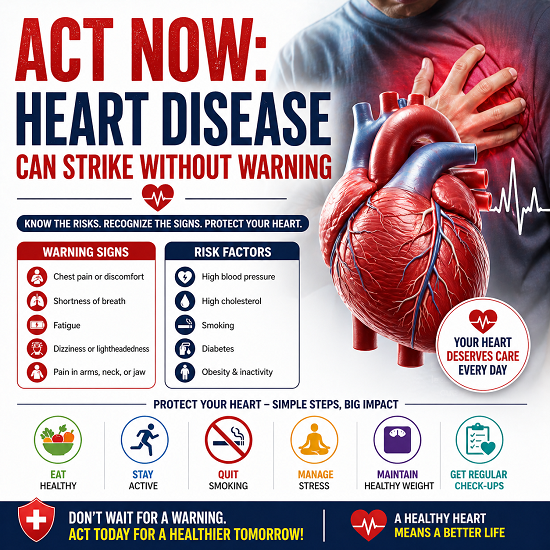
🚨 Warning Signs You Should Never Ignore
Although heart disease can be silent, some warning signs may appear; however, in many cases, these symptoms are mild or easily overlooked. Therefore, it is important to stay alert. In addition, paying attention to even small changes in your body can help detect problems early. Recognizing them early can save your life.
Common symptoms include:
- Chest pain or discomfort
- Shortness of breath
- Fatigue
- Dizziness
- Pain in arms, neck, or jaw
However, symptoms can vary, especially in women; moreover, they may appear differently or less typically than expected. Therefore, it is important to stay alert. In addition, you should never ignore unusual or persistent discomfort, as early attention can make a significant difference.
🧠 Daily Habits to Keep Your Heart Healthy
Your daily routine has a big effect on heart health. Therefore, small good habits can protect your heart for a long time. First, try to stay active every day. Even a 20–30 minute walk is helpful. It improves blood flow and keeps your heart strong. In addition, choose stairs instead of lifts when possible.
Second, eat simple and healthy food. For example, include fruits, vegetables, and whole grains in your meals. Also, try to reduce fried and oily foods. This helps control cholesterol and weight.
Third, drink enough water every day. Water keeps your body clean and supports good circulation. Moreover, avoid too many sugary drinks or soda. Fourth, manage your stress. Stress can affect your heart badly. So, take breaks, listen to music, or practice deep breathing.
Finally, sleep well every night. Good sleep gives your heart time to rest and recover. Therefore, try to sleep at the same time daily. In conclusion, these small daily habits can greatly improve your heart health and reduce the risk of heart disease.
🧬 Major Risk Factors
Understanding risk factors is very important for prevention. Some risks cannot be changed. However, many risks can be controlled with the right habits. Therefore, it is important to focus on what you can improve. Moreover, small daily changes can lower your overall risk.
Common risk factors include:
- High blood pressure
- High cholesterol
- Smoking
- Diabetes
- Obesity
- Sedentary lifestyle (lack of exercise)
Furthermore, unhealthy eating, stress, and poor sleep can also increase risk over time. As a result, the heart becomes weaker and works harder.
🥗 Heart Disease Prevention: Act Now—It Can Strike Without Warning
Prevention is the most powerful tool against heart disease. Simple daily habits can make a significant difference.
✔️ Eat a Heart-Healthy Diet
Focus on fruits, vegetables, whole grains, and healthy fats. Avoid processed foods and excess salt.
✔️ Stay Physically Active
Aim for at least 30 minutes of exercise most days of the week.
✔️ Quit Smoking
Smoking damages blood vessels and increases the risk of heart disease.
✔️ Manage Stress
Chronic stress can negatively affect heart health. Practice relaxation techniques like meditation or yoga.
✔️ Maintain a Healthy Weight
Keeping your weight in check reduces strain on your heart.
💊 Treatment Options
If diagnosed early, heart disease can be managed effectively. Treatment may include:
- Lifestyle changes
- Medications
- Medical procedures (in severe cases)
Following your doctor’s advice and maintaining healthy habits can greatly improve outcomes.
🌟 Final Thoughts
Heart disease can come without warning. However, it is often preventable with the right care and habits. Therefore, it is important to stay informed and take action early.
By understanding the risks, you can make better choices for your health. In addition, by recognizing early symptoms, you can seek help on time. As a result, serious problems can often be avoided.
📚 References
- World Health Organization – Global data on cardiovascular diseases, risk factors, and prevention strategies
- Centers for Disease Control and Prevention – Heart disease statistics, symptoms, and prevention guidelines
- Mayo Clinic – Detailed information on heart disease causes, diagnosis, and treatment
- American Heart Association – Heart health education, lifestyle recommendations, and risk management
- National Heart, Lung, and Blood Institute – Research-based insights on cardiovascular diseases and prevention
Medications that have been suggested by doctors worldwide are available on the link below
https://mygenericpharmacy.com/category/disease/heart-disease