Fertility Problems: Causes, Myths & Proven Solutions
Understanding Fertility Problems
Fertility problems affect many couples around the world. In fact, they are more common today. This is because of lifestyle changes, stress, and health issues. Fertility means the ability to have a child. However, infertility means not getting pregnant after one year of regular, unprotected sex.
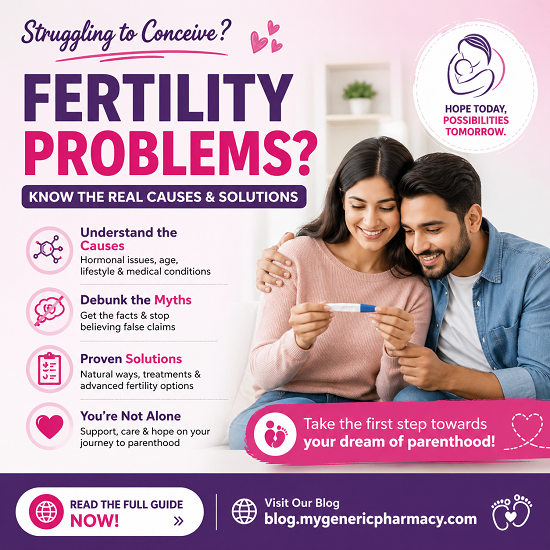
The good news is that many fertility issues can be treated. Also, early care can help a lot. So, understanding the problem is the first step toward a solution.
Common Causes of Fertility Problems
There are many causes. For example, some are linked to health. Others are due to lifestyle choices.
1. Age Factor
Age plays an important role. In women, fertility drops after 35. Similarly, men may have lower sperm quality with age. So, timing matters. As a result, making healthy choices is crucial.
Male factors are also important. In fact, they cause many infertility cases. Low sperm count and poor movement are common issues. So, both partners should be checked.
Early Signs of Fertility Problems
Recognizing early signs can help you act fast. In many cases, symptoms are mild. Sometimes, you may not notice them at first. However, paying attention to changes in your body is very important. This is because early care can improve your chances of treatment success.
- Hormone changes, such as acne or excess hair
In addition, some people may feel stress or emotional changes during this time. Because of this, it is important not to ignore these signs.
If you notice any of these symptoms, seek medical advice early. As a result, treatment can start sooner and may work better.
Fertility Problems: Common Myths—Debunked
There are many myths about fertility. However, believing them can delay treatment. So, let’s clear these common myths.
Myth 1: Infertility is only a woman’s problem
👉 Fact: Male factors also play a big role.
Myth 2: Stress alone causes infertility
👉 Fact: Stress affects hormones. However, it is rarely the only cause.
Myth 3: IVF always works
👉 Fact: IVF can help. However, it does not guarantee success.
Fertility Problems: Proven Solutions to Improve Fertility
Fortunately, there are many ways to improve fertility. Also, small lifestyle changes can help a lot.
Eat fresh and healthy meals every day. Also, exercise regularly. Walking, yoga, or light workouts can help the body stay active. As a result, your body becomes healthier and better prepared for pregnancy.
So, tracking ovulation may improve your chances of getting pregnant. Because of this, relaxation is important. Try yoga, meditation, or deep breathing exercises. Also, get enough sleep each night.
Limit alcohol and caffeine intake. Most importantly, quit smoking. Smoking can harm reproductive health in both men and women. As a result, fertility may improve over time.
Sometimes, medical help is needed. For example, doctors may suggest:
- Fertility medicines
- Hormone treatment
- IVF or other assisted techniques
In many cases, early treatment can improve the chances of success.
Diet and Nutrition for Better Fertility
Healthy food plays a major role in fertility. In fact, the right diet helps the body work properly. So, eating balanced meals every day is very important. For example, fruits, vegetables, nuts, seeds, eggs, and whole grains support reproductive health. In addition, healthy fats from foods like fish and nuts may help hormone balance.
Also, try to eat fresh food instead of processed meals. Too much sugar and junk food can affect energy and overall health. Because of this, limiting unhealthy foods is a smart choice. As a result, the body can function better. At the same time, avoid too much junk food, sugar, and fried foods. These foods may affect energy levels and overall health. Because of this, eating fresh home-cooked meals is often a better option.
Furthermore, eating meals on time may help maintain stable energy and healthy hormone levels. Also, try to eat meals on time.
Eat more fresh foods.
Choose:
- Fruits
- Vegetables
- Whole grains
- Nuts and seeds
- Eggs and lean protein. Also, healthy fats may help hormone balance.
- Because of this, the body can feel better and stronger.
In many cases, early treatment can improve the chances of success.
How to Treat Fertility Effectively
Treatment depends on the cause. So, finding the exact problem is very important. In many cases, healthy habits and medical care work well together. For example, some people may need medicine. Others may need advanced treatment. As a result, the chances of success can improve.
When to See a Doctor for Fertility Problems
You should consult a healthcare professional if:
- It has been trying to conceive for over a year
- over 35 and trying for 6 months
- it irregular menstrual cycles
- You have known reproductive issues
- You have a history of miscarriage
Therefore, early diagnosis can improve treatment success rates. As a result, treatment becomes more effective.
Emotional Impact of Fertility Problems
Fertility challenges can affect mental health. For example, many people feel stress, worry, or sadness. Because of this, emotional support is very important. Talking to a counselor may help. Also, joining a support group can make you feel less alone. Spending time with family and friends may also help you stay calm and positive. As a result, you may cope better during this time.
👉 Read more about reproductive health here:
https://blog.mygenericpharmacy.com/index.php/category/fertility/
Tips to Prevent Fertility Problems Naturally
Prevention is always better. So, here are some simple tips:
- Maintain a healthy weight
- Eat a balanced diet
- Exercise regularly
- Avoid smoking and alcohol
- Manage stress
In addition, try to get enough sleep every night. Also, drink plenty of water and stay active during the day. By following these steps, you can improve your reproductive health. Over time, these healthy habits can make a big difference.
Frequently Asked Questions
Q1: How can I improve fertility naturally?
Eat healthy foods, stay active, and reduce stress. Also, avoid smoking and alcohol. In addition, get enough sleep and drink plenty of water.
Q2: When should I see a doctor?
See a doctor after 12 months of trying. However, if you are over 35, see a doctor after 6 months. Early care can improve treatment results.
Healthy Daily Routine for Better Fertility
A healthy routine can support fertility in many ways. In fact, small habits can improve your overall health. First, wake up and sleep at the same time each day. Good sleep helps balance hormones. As a result, the body works better.
Second, eat fresh and healthy foods. Fruits, vegetables, and whole grains give the body important nutrients. Also, healthy meals help maintain energy levels.
Third, stay active. Simple exercises, such as walking or yoga, can improve blood flow. Because of this, the reproductive system may work better.
Final Thoughts
Fertility depends on many factors. However, the right steps can improve your chances. By making healthy choices and getting help early, you can move closer to your goal. In addition, small daily habits can support your overall health. In conclusion, awareness and early action are very important. So, stay positive and take good care of your health.
References
- World Health Organization. (2023). Infertility and reproductive health.
- Centers for Disease Control and Prevention. Infertility FAQs and statistics.
- Mayo Clinic. Infertility: Causes and Treatment.
- National Institutes of Health. Fertility and reproductive health overview.
Medications that have been suggested by doctors worldwide are available on the link below
https://mygenericpharmacy.com/category/products/disease/fertility-agent