Osteoarthritis: The Complete Guide to Joint Pain, Causes & Treatment
Osteoarthritis: Symptoms, Causes & Joint Pain Treatment
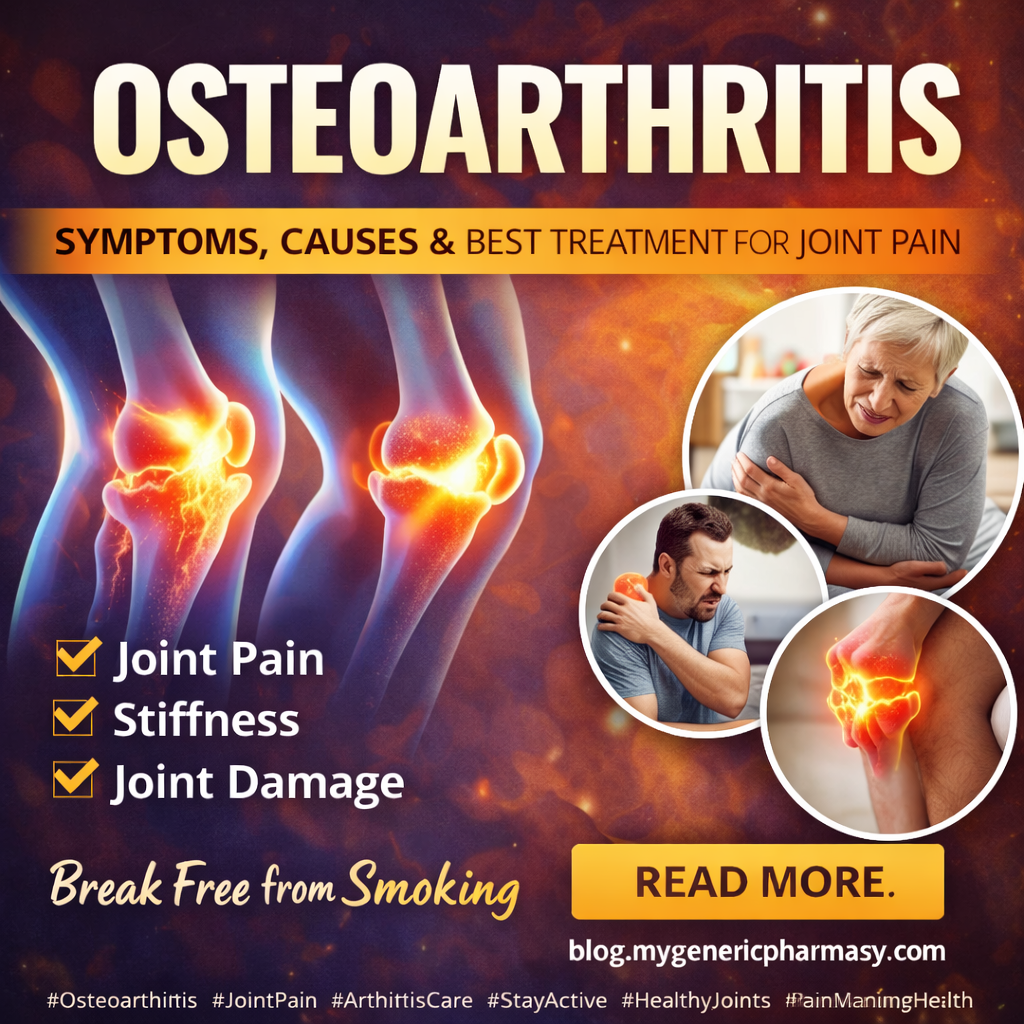
Osteoarthritis, its symptoms, causes, and treatment options. Discover effective ways to manage joint pain and maintain mobility and joint health.
Osteoarthritis (OA) is the most common form of arthritis, affecting over 32 million adults in the United States alone . Often called “wear and tear” arthritis, it occurs when the protective cartilage that cushions the ends of your bones gradually wears down. While OA can damage any joint, it most commonly affects the knees, hips, hands, and spine.
Unlike rheumatoid arthritis, which is an autoimmune condition, osteoarthritis is primarily a mechanical disorder. However, it’s more than just aging joints—it’s a complex condition involving the entire joint structure .
What Happens in Osteoarthritis?
In healthy joints, a smooth layer of cartilage allows bones to glide effortlessly against each other. In osteoarthritis:
- Cartilage breaks down: The smooth surface becomes rough and thin
- Bone changes: Bones may thicken and form growths called bone spurs (osteophytes)
- Inflammation: The joint lining (synovium) can become irritated
- Fluid changes: Joint fluid may lose its shock-absorbing properties
- Supporting structures weaken: Ligaments and muscles around the joint may weaken
The result is pain, stiffness, and reduced mobility that worsens over time .
Common Symptoms
Osteoarthritis symptoms develop gradually and worsen over years. Key signs include:
Pain
- Aching or sharp pain in the affected joint
- Pain worsens with activity and improves with rest
- May feel deep, burning, or throbbing
Stiffness
- Morning stiffness lasting less than 30 minutes
- Stiffness after sitting or resting (gelling phenomenon)
- Improves with movement
Other Symptoms
- Swelling: From fluid accumulation or bone enlargement
- Crepitus: Grating sensation or cracking sound with movement
- Loss of flexibility: Decreased range of motion
- Joint instability: Buckling or giving way (especially in knees)
- Muscle weakness: Around affected joints
Common Sites
- Knees: Pain when walking, climbing stairs, kneeling
- Hips: Groin pain, buttock pain, difficulty putting on shoes
- Hands: Base of thumb, finger joints (Heberden’s nodes at fingertips, Bouchard’s nodes at middle joints)
- Spine: Neck or low back pain, stiffness
Causes and Risk Factors
Non-Modifiable Risk Factors
- Age: Risk increases significantly after 50
- Gender: More common in women, especially after menopause
- Genetics: Family history increases risk
- Joint structure: Congenital abnormalities (hip dysplasia, misalignment)
Modifiable Risk Factors
- Obesity: The single most important preventable risk factor. Excess weight puts 4-6 times more pressure on knees . Losing just 5-10% of body weight significantly reduces pain
- Joint injuries: Previous injuries (ACL tears, meniscus tears, fractures) increase OA risk later in life
- Occupation: Jobs with repetitive joint stress (kneeling, squatting, heavy lifting)
- Sports: High-impact sports with joint stress or injury risk
- Muscle weakness: Weak muscles provide less joint support
Diagnosis: How OA Is Identified
Medical History and Physical Exam
- Symptom pattern, location, and triggers
- Family history
- Joint examination for tenderness, swelling, crepitus, range of motion
- Gait assessment
Imaging
- X-rays: Show joint space narrowing, bone spurs, bone changes. Can detect OA before symptoms appear
- MRI: Not routinely needed but shows cartilage, ligaments, menisci in detail
Laboratory Tests
No blood test diagnoses OA, but tests rule out other arthritis types (rheumatoid arthritis, gout). Joint fluid analysis may be done if swelling present .
Treatment Options
Osteoarthritis treatment focuses on managing symptoms, improving function, and slowing progression. No cure exists, but many effective treatments help.
Lifestyle Modifications (First-Line Treatment)
Exercise:
- Low-impact aerobic: Walking, swimming, cycling (150 minutes weekly)
- Strength training: Builds muscles supporting joints (quadriceps for knees, glutes for hips)
- Range of motion: Stretching, yoga, tai chi
- Balance exercises: Reduces fall risk
Weight Management:
- Even 5-10% weight loss significantly reduces pain and improves function
- Every pound lost removes 4 pounds of pressure from knees
Joint Protection:
- Pace activities (balance rest and activity)
- Use proper body mechanics
- Avoid prolonged kneeling, squatting, stair climbing
Physical and Occupational Therapy
- Personalized exercise programs
- Gait training
- Assistive devices (canes, walkers, braces)
- Energy conservation techniques
- Adaptive tools (jar openers, long-handled grippers)
Medications
Topical (First-line for mild-moderate OA):
- NSAID gels/creams: Diclofenac gel (Voltaren)—fewer systemic side effects
- Capsaicin cream: Depletes substance P involved in pain transmission
Oral Medications:
- Acetaminophen: For mild pain (caution with liver, limit to <3,000 mg daily)
- Oral NSAIDs: Ibuprofen, naproxen—effective but monitor stomach, kidney, heart risks
- Duloxetine: Antidepressant that helps chronic musculoskeletal pain
Injections:
- Corticosteroid injections: Short-term relief (weeks to months), limit to 3-4 per year
- Hyaluronic acid (viscosupplementation): Controversial evidence, may help some
- Platelet-rich plasma (PRP): Emerging evidence, especially for knee OA
Surgical Options
Considered when conservative treatments fail and pain significantly impacts quality of life:
- Arthroscopy: Generally not recommended for OA (except for mechanical symptoms like locking)
- Osteotomy: Realigning bone (younger patients with uneven wear)
- Partial joint replacement: Replacing only damaged compartment
- Total joint replacement: Gold standard for end-stage OA, >90% success rates
Self-Management Strategies
Heat and Cold
- Heat: Warm showers, heating pads for stiffness
- Cold: Ice packs (wrapped in towel) for acute pain or after activity
Assistive Devices
- Canes, walkers (reduce joint load)
- Shock-absorbing shoes or insoles
- Knee braces (unloader braces for knee OA)
- Long-handled tools, raised toilet seats
Diet and Nutrition
- Anti-inflammatory foods: Omega-3s (fatty fish, walnuts), colorful fruits/vegetables
- Mediterranean diet pattern: Associated with lower OA risk and symptoms
- Supplements: Glucosamine/chondroitin (mixed evidence, may help some), vitamin D (correct deficiency), turmeric (moderate evidence for pain)
Mind-Body Approaches
- Cognitive behavioral therapy (CBT) for pain management
- Mindfulness meditation
- Stress reduction (stress worsens pain perception)
- Support groups
When to See a Doctor
Consult a healthcare provider if:
- Joint pain interferes with daily activities
- Pain persists despite self-care
- Joint is visibly swollen, warm, or red
- You have difficulty using the joint normally
- Morning stiffness lasts >30 minutes
Living Well with Osteoarthritis
Osteoarthritis is chronic, but it doesn’t have to define your life. Successful management includes:
- Stay active with appropriate exercises
- Maintain healthy weight to reduce joint stress
- Protect your joints in daily activities
- Use medications wisely under medical guidance
- Listen to your body—pace yourself, rest when needed
- Stay positive—depression and anxiety worsen pain
With proper management, most people with osteoarthritis maintain active, productive lives.
The Future: Emerging Treatments
Research continues to advance OA treatment:
- Disease-modifying OA drugs (DMOADs): Aim to slow or stop disease progression
- Stem cell therapy: Experimental for cartilage regeneration
- Senolytics: Drugs targeting aging cells that promote inflammation
- Gene therapy: Delivering protective proteins to joints
- Personalized medicine: Matching treatments to OA subtypes
While not yet available, these approaches offer hope for better outcomes .
References:
- Arthritis Foundation. Osteoarthritis.
- Centers for Disease Control and Prevention. Osteoarthritis (OA).
- Mayo Clinic. Osteoarthritis – Symptoms and causes.
- Johns Hopkins Medicine. Osteoarthritis.
- American College of Rheumatology. Osteoarthritis Treatment Guidelines.
Medications that have been suggested by doctors worldwide are available on the link below
https://mygenericpharmacy.com/category/pain-relief
Disclaimer: This article is for educational purposes only. Consult a healthcare provider for proper diagnosis and treatment of osteoarthritis.